How to Set Up a White Noise Machine for a Baby?
Every parent knows the struggle of a baby who wakes up at the slightest sound. A door closing or a car honking outside can turn a peaceful nap into a crying session. This is where a white noise machine can help.
White noise machines work by masking sudden noises that might startle your baby awake. But setting one up the wrong way can do more harm than good. Placement and volume both matter a lot.
Many parents make simple mistakes, like placing the machine too close to the crib or turning the volume up too high. These errors can affect your baby’s hearing and sleep quality over time.
This guide will show you exactly how to set up a white noise machine safely. You will learn the ideal distance to keep between the machine and the crib. We will also cover safe volume levels and simple tips to build a soothing sleep routine.
By the end, you will feel confident creating a safe and calm sleep space for your little one.
In a Nutshell
Setting up a white noise machine the right way keeps your baby safe and helps them sleep better. Here is a quick summary of what matters most.
-
Keep distance in mind. Place the machine at least seven feet away from the crib. Never put it right beside your baby’s head.
-
Watch the volume closely. Sound should stay below 60 decibels, and lower is even safer. Think soft background hum, not loud noise.
-
Use it as background sound only. The machine should mask sudden noises, not create a new source of loud sound in the room.
-
Avoid common mistakes. Placing the unit too close or running it too loud for too long can harm your baby’s hearing over time.
-
Balance distance and volume together. Both factors matter equally. Getting one right does not fix a problem with the other.
-
Plan for the future. You can slowly reduce machine use as your baby grows, helping them adjust to natural sounds again.
Follow these simple steps, and your baby’s sleep space will stay both calm and safe.
What Is a White Noise Machine and How Does It Help Babies Sleep?
A white noise machine is a device that plays consistent, soft sounds to help your baby sleep better. These machines produce sounds like rainfall, ocean waves, or gentle static. The main job of a white noise machine is to mask disruptive noises that could startle your baby awake during naps or nighttime sleep.
Babies are sensitive to sudden sounds. A door slamming, a dog barking, or traffic outside can jolt them awake. White noise creates a steady audio blanket that covers these unexpected noises. Your baby’s brain gets used to the constant sound and stops reacting to small changes.
Why babies sleep better with white noise: The steady sound mimics the environment your baby experienced in the womb. That environment was never silent. It had constant sounds from your heartbeat, breathing, and digestion. White noise recreates something familiar and comforting.
The machine also helps regulate your baby’s sleep cycles. When external noises are masked, your baby experiences fewer interruptions. This means longer, deeper sleep for your little one.
Safety matters most. White noise machines only help when used correctly. Improper setup can actually harm your baby’s hearing or create new sleep problems. The volume must stay low, and the machine must sit far from the crib.
Think of white noise as a sleep aid, not a cure. It works best as part of a complete sleep routine. Good nap schedules, comfortable room temperature, and dark lighting all work together with white noise to create ideal sleep conditions.
Your baby will benefit most when you use the machine consistently but sensibly. This balanced approach gives your baby the best chance for peaceful, restorative sleep.
Choosing the Right Spot: Ideal Placement and Distance from the Crib
Finding the right spot for your white noise machine is one of the most important steps in safe setup. The location you choose affects both how well the machine works and how safe it is for your baby.
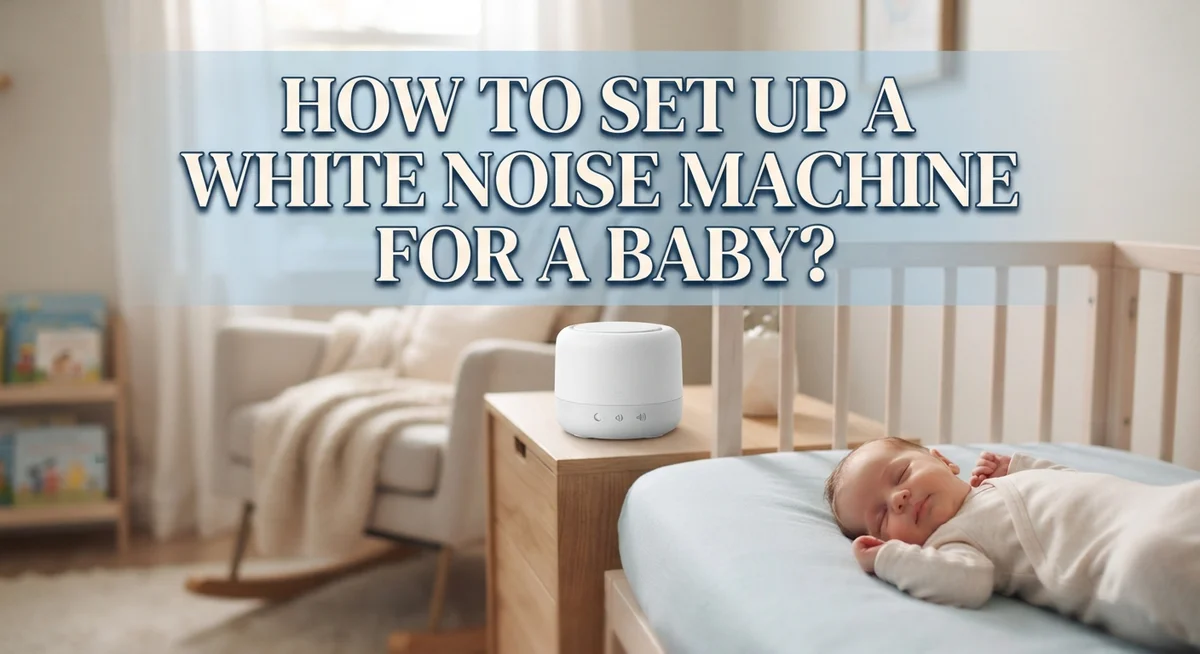
Distance from the crib matters more than many parents realize. You should place the machine at least seven feet away from where your baby sleeps. This distance protects your baby’s ears from sound that gets too intense. If your room is small, aim for at least three feet as a bare minimum, though more distance is always better. Never put the machine right next to the crib or near your baby’s head.
Position the machine so the sound travels across the room rather than directly toward your baby. A good spot is on a shelf, dresser, or table on the opposite side of the room from the crib. This setup lets the white noise spread evenly throughout the space instead of concentrating near your baby’s ears.
Keep the machine on a stable, secure surface where it cannot fall into the crib. Make sure the cord stays out of reach and cannot create a strangulation hazard. Check that nothing blocks the speaker, as this can change how the sound travels.
Temperature and humidity matter too. Avoid placing the machine in direct sunlight or near heating vents, as these can damage the device. Keep it away from moisture and dampness as well.
Test the setup before your baby sleeps. Stand where your baby’s head will be and listen to the volume and sound quality. Adjust the position if the sound feels too loud or too focused in one direction. This simple test helps you find the sweet spot for your room’s layout.
Step-by-Step Guide to Setting Up Your White Noise Machine
Start by choosing a location in your baby’s room that is away from the crib. Place the machine at least seven feet away from where your baby sleeps. This distance protects your baby’s ears and prevents the sound from being too intense right next to them.
Set the machine on a stable surface like a dresser, shelf, or nightstand. Make sure it sits firmly so it cannot tip over or fall. Keep the device away from water sources and out of reach if your baby can climb.
Position the machine so sound travels across the room rather than directly at your baby’s head. Think of it as creating a sound blanket that fills the space evenly. This approach masks disruptive noises without overwhelming your little one.
Now adjust the volume to the lowest setting that still masks background noise. Sound should never exceed 60 decibels. Many experts suggest keeping it even lower, around 50 decibels or less. Use your phone’s sound meter app to check the actual volume if you have one available.
Test the setup before your baby sleeps in the room. Sit where your baby’s head will be and listen to the sound level. It should feel soft and calming, not jarring or loud.
Turn on the machine for short periods at first. This helps your baby adjust to the new sound gradually. You can increase usage over time as your baby gets comfortable with it.
Check the machine regularly to ensure it still works properly and the volume hasn’t changed. Keep cords tucked away safely so your baby cannot reach them.
Setting Safe Volume Levels: Decibel Guidelines Explained
Understanding decibel levels helps you keep your baby safe while using white noise. Decibels measure sound intensity, and babies have sensitive hearing that needs protection.
The general rule is simple: keep volume at or below 50 decibels for safety. Some experts allow up to 60 decibels maximum, but lower is always better. To put this in perspective, normal conversation sits around 60 decibels, while a whisper measures about 30 decibels.
Your white noise machine should sound like a soft, gentle hum in the background. If you can hear it clearly from across the room, it’s likely too loud. The machine should mask disruptive sounds without becoming the loudest noise in the room.
Most machines have volume dials or buttons. Start at the lowest setting and increase only if outside noise still disturbs your baby’s sleep. Test the volume by standing near the crib and listening for how loud the sound actually is.
Prolonged exposure to loud white noise can damage your baby’s hearing over time. Even sounds below 60 decibels can cause problems if played constantly at high volume. This is why distance matters as much as volume control.
Check your machine’s manual for its decibel output at different settings. Some machines display the actual decibel level, which makes adjustment easier. If your machine doesn’t show this information, err on the side of caution and keep it quieter.
Remember that your baby doesn’t need loud white noise to sleep well. Soft, consistent sound works just as effectively and keeps hearing safe. Monitor the volume regularly since settings can accidentally change during use.
Best Practices for Daily Use and Nighttime Routines
White noise works best when you use it as part of a consistent bedtime routine. Start by turning on the machine about five to ten minutes before your baby falls asleep. This gives them time to adjust to the sound and signals that sleep is coming.
Keep the volume steady every night. Your baby’s brain will learn to associate this specific sound level with sleep time. Avoid changing the volume frequently, as this can confuse their sleep signals and make the routine less effective.
Use white noise during naps and nighttime sleep. Consistency across different sleep times helps your baby recognize the pattern. If your baby naps in different rooms, consider using the machine in each location.
Gradually reduce usage as your baby grows older. Many parents worry about dependency, but you can slowly lower the volume over weeks or months. This gentle approach lets your baby adjust without sudden changes that might disrupt sleep.
Turn off the machine once your baby falls asleep if you prefer. Some parents keep it running all night for continuous background masking. Both approaches work fine, so choose what fits your family’s needs.
Check the machine daily to confirm the volume hasn’t shifted. Machines can drift slightly over time, especially if someone adjusts them accidentally. A quick check each morning takes seconds but keeps safety intact.
If your baby wakes frequently, the machine might be too quiet to mask household noise. Increase the volume slightly while staying within safe limits. If your baby seems startled or agitated, the sound might be too loud or the placement too close to the crib.
Common Mistakes to Avoid When Using White Noise for Babies
Many parents make simple mistakes when using white noise machines. Understanding these errors helps you keep your baby safe and comfortable.
The most common mistake is placing the machine too close to your baby’s crib. Sound travels and concentrates when the source is near. Keep the machine at least 7 feet away from where your baby sleeps. This distance prevents sound from becoming too intense near your baby’s ears and head.
Another frequent error is setting the volume too high. Parents often think louder white noise works better, but this isn’t true. Excessive volume can actually startle babies instead of soothing them. High noise levels over time may harm your baby’s hearing development.
Some parents leave white noise running continuously throughout the day. This constant exposure reduces its effectiveness. Your baby’s brain stops noticing background sound when it never stops. Use white noise only during sleep times to keep it effective.
Positioning matters more than many realize. Never place the machine directly beside your baby’s head or ears. Sound should travel across the room, not concentrate in one spot. A dresser or shelf across the room works well.
Parents sometimes forget to check their machine’s volume settings regularly. Settings can shift accidentally when cleaning or moving the device. Check weekly to ensure the volume stays at your chosen level.
Finally, avoid using the machine as a solution for all sleep problems. If your baby struggles to sleep, white noise alone won’t fix underlying issues. Consider other factors like room temperature, feeding schedules, and comfort. White noise works best as one part of a healthy sleep routine.
How to Gradually Wean Your Baby Off White Noise
Weaning your baby off white noise takes patience and a slow approach. Start by reducing the volume gradually over several weeks rather than stopping suddenly. Your baby’s sleep patterns have adapted to the sound, so quick changes can cause sleep disruption.
Begin by lowering the volume by small increments every few days. If your machine uses a dial, turn it down just slightly. Your baby won’t notice minor changes, but their brain will slowly adjust. This method works better than turning the machine off completely.
Next, shorten the duration of use. Instead of running white noise all night, turn it off after your baby falls asleep. This teaches their brain that they don’t need continuous sound to stay asleep. Many babies sleep fine once they’re in deep sleep anyway.
Gradually increase the nights when you skip white noise entirely. Start with one night per week without the machine. Then move to two nights, then three. Your baby will learn to sleep in silence while still having the option on difficult nights.
Watch for signs your baby is ready. If they sleep well without the machine for several weeks, they’ve successfully adapted. Some babies sleep better without it, while others need it longer. There’s no fixed timeline because every child develops differently.
During this transition, keep the room environment consistent. Maintain the same bedtime routine and room temperature. This stability helps your baby focus on adjusting to less noise rather than dealing with multiple changes.
If your baby struggles during weaning, slow down the process. Return to the previous volume level for a few more weeks before trying again. Patience during this transition prevents sleep regression and keeps your baby comfortable.
Troubleshooting Common White Noise Machine Issues
White noise machines sometimes stop working properly, or they create problems you didn’t expect. Knowing how to fix common issues helps you keep your baby sleeping well.
Machine stops producing sound is one frequent problem. Check that the power cord connects firmly to both the wall outlet and the machine. Test a different outlet to rule out electrical problems. If the machine has batteries, replace them with fresh ones. Inspect the speaker for dust or debris blocking the sound. A soft cloth can clean the speaker gently.
Volume keeps changing unexpectedly happens when settings shift accidentally. Verify that no one bumped the volume dial or buttons. Some machines have locked settings to prevent accidental changes. Look for a lock feature in your manual and enable it. If the volume drifts on its own, the machine may need repair or replacement.
Baby wakes up suddenly when the machine runs suggests the sound is too loud or the placement is wrong. Move the machine farther away from the crib, aiming for at least 7 feet of distance. Reduce the volume to the lowest level that still masks household noise. Aim for 50 decibels or below for safety. Test the machine at night to hear what your baby hears from the crib.
Machine makes strange noises or hums indicates a mechanical issue. The motor or speaker may be failing. Unplug the machine immediately and stop using it. This protects your baby from unpredictable sounds.
Timer doesn’t work properly means the machine won’t turn off when scheduled. Check that you set the timer correctly according to your manual. Replace batteries if the machine runs on them. If problems continue, the timer circuit may need professional repair.
Final Thoughts
Setting up a white noise machine does not need to feel hard. With a few simple steps, you can create a safe and calm sleep space for your baby.
Placement and volume matter the most. Keep the machine at least seven feet from the crib. Set the sound level below 60 decibels, and lower if possible.
Think of white noise as a helper, not a fix for everything. It works best when you pair it with a steady bedtime routine and a comfortable room.
Check the machine often. Make sure the volume stays steady and the placement does not shift over time. Small changes can affect your baby’s sleep quality.
Your baby’s needs will change as they grow. What works today might need small adjustments next month. Stay flexible and watch for cues from your baby.
Safety always comes first. Never place the machine inside the crib or right next to your baby’s head. Distance and low volume protect your baby’s hearing.
If you ever feel unsure, trust your instincts as a parent. You know your baby best, and small tweaks often solve most problems.
White noise machines can support better sleep for both you and your baby. Used the right way, they create a calm and predictable environment.
Patience helps during this process. Some babies adjust fast, while others take more time to settle into a new sound routine.
In the end, simple habits make the biggest difference. Correct placement, safe volume, and regular checks will keep your baby’s sleep space safe and soothing.
Frequently Asked Questions
How far should I place the white noise machine from my baby’s crib?
Position the machine at least 7 feet away from the crib. If that’s not possible in your room, keep it a minimum of 3 feet away. The goal is to ensure sound reaches your baby as soft background noise, not as a direct blast. Never place the machine inside the crib or directly beside your baby’s head.
Distance matters because it allows the sound to spread naturally through the room. This prevents the noise from being too intense near your baby’s ears.
What volume level is safe for babies?
Keep the volume at 50 decibels or lower. Some sources suggest staying under 60 decibels as a maximum. Start with the lowest effective level that still masks disruptive sounds in your home.
You can test the volume by standing near where your baby sleeps. The sound should feel calm and gentle, not jarring. If you have to raise your voice to speak over the machine, it’s too loud.
Can I leave the white noise machine on all night?
Yes, you can run it throughout the night. Many parents find this helpful for consistent sleep. However, some families prefer turning it off after their baby falls asleep to reduce dependency.
The choice depends on your baby’s needs and your family’s preference. There’s no single right answer. Just monitor your baby’s sleep patterns and adjust as needed.
What mistakes should I avoid when setting up the machine?
Don’t place it too close to your baby. Avoid using excessive volume, even if you think it helps sleep better. Never position the machine right next to your baby’s ears or inside the crib.
Also skip using white noise as a solution for all sleep problems. It works best as one tool among many good sleep habits.

DK is the founder of Deep Slumber Finds, where he combines a genuine passion for quality sleep with thorough product research to help readers make confident buying decisions. When he’s not testing mattresses or comparing pillows, you’ll find him exploring the latest sleep science and hunting down the best deals so you don’t have to.