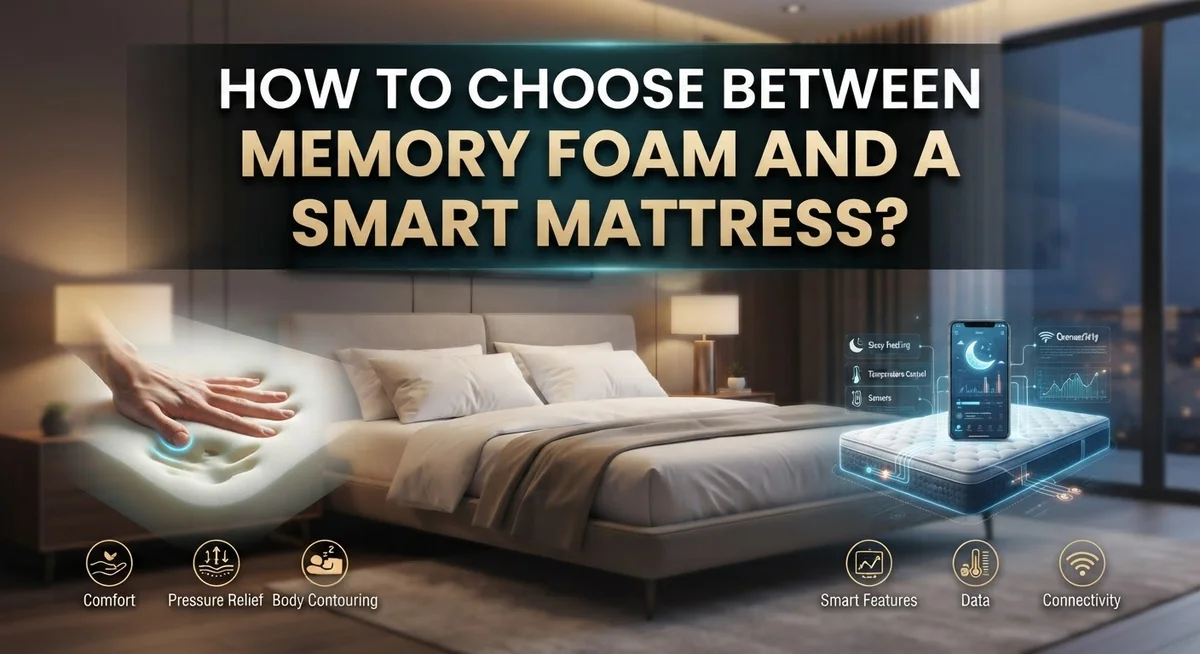
Memory Foam vs Smart Mattress: How to Choose the Right One
Choosing a new mattress feels like a big decision. You spend almost a third of your life sleeping on it. So the choice between memory foam and a smart mattress really matters.
Memory foam has been a popular choice for years. It molds to your body shape. It offers relief for pressure points and joint pain.
Smart mattresses bring new technology into your bedroom. They track your sleep patterns. Some even adjust firmness based on your body position.
Both options have real benefits. But they work differently for different sleepers. Your body weight, sleep style, and comfort needs all play a role here.
This guide will help you understand both choices clearly. We will look at layer composition and how it affects support. We will explain why testing a mattress in person matters so much.
You will also learn about common mistakes people make. Many buyers focus only on fancy features. They forget to check basic firmness and support levels first.
By the end, you will know exactly what to look for. You can then pick the mattress type that truly fits your sleep needs.
In a Nutshell
Here is a quick summary to help you decide fast.
-
Memory foam shapes itself to your body. It gives deep pressure relief and works well for side sleepers or people with joint pain.
-
Smart mattresses track your sleep and adjust firmness. They suit people who want data driven comfort and enjoy tracking their rest patterns.
-
Body weight matters a lot. Heavier individuals often need firmer support layers. Lighter individuals usually feel comfortable on softer surfaces.
-
Layer composition changes everything. Gel foam, convoluted foam, and base foam each play a different role in comfort and support.
-
Always test the mattress in person before you buy. This simple step helps you avoid costly returns later.
-
Check the warranty terms closely. A good warranty protects you if the mattress wears out too fast.
-
Think about your sleep habits first. Your comfort needs should guide your choice, not just fancy features.
This nutshell view gives you a clear starting point. Keep these points in mind as you read the full guide below.
What Is a Memory Foam Mattress?
Memory foam mattresses use special material that responds to your body heat and weight. When you lie down, the foam softens and molds around your shape. This creates a custom fit that feels different for each person.
The foam contains multiple layers that work together. The top layer is usually gel infused or convoluted foam. This layer provides comfort and helps with temperature control. The middle layers offer support and cushioning. The base layer sits at the bottom and gives overall stability to the entire mattress.
Density matters significantly in memory foam quality. Higher density foam lasts longer and provides better support. Lower density foam feels softer but may wear out faster. Most memory foam mattresses range from 3 to 6 inches thick in the foam layers alone.
Memory foam responds slowly to pressure changes. This means it takes a few seconds to adjust when you move. Some people love this gradual response because it feels cradling and secure. Others find it too slow if they change positions frequently during sleep.
Temperature sensitivity is a key feature of memory foam. The material softens when warm and firms up when cool. Your body heat naturally warms the foam beneath you. This creates that sinking sensation many people find comfortable.
Memory foam works well for side sleepers and people with joint pain. The material reduces pressure points across your shoulders, hips, and lower back. However, heavier individuals may need thicker foam or higher density options for adequate support.
The material also isolates motion effectively. If your partner moves around, you will feel less disturbance. This makes memory foam popular for couples with different sleep schedules.
What Is a Smart Mattress?
A smart mattress is a bed that uses technology to monitor and respond to your sleep patterns. These mattresses contain sensors that track your movements, heart rate, and breathing throughout the night.
Smart mattresses collect sleep data in real time. The sensors measure how long you sleep, how often you move, and when you enter different sleep stages. This information gets sent to an app on your phone so you can review your sleep quality.
Many smart mattresses have adjustable firmness features. The bed can change how soft or firm different sections feel based on your position or preferences. Some models let each side of the bed adjust independently, which helps couples with different comfort needs.
Temperature control is another common feature. Smart mattresses can warm up or cool down specific areas to keep you comfortable all night long. This technology prevents you from waking up too hot or too cold.
Smart mattresses offer sleep insights that regular beds cannot provide. The data helps you understand your sleep patterns and identify what affects your rest quality. You might discover that certain activities before bed impact your sleep negatively.
These mattresses connect to your smartphone through Bluetooth or WiFi. You control settings and view your sleep reports directly from the app. Some models even sync with other smart home devices like your alarm clock or bedroom lights.
Smart mattresses work best for people who want detailed sleep information and enjoy using technology. They suit anyone interested in improving their sleep habits through data tracking. However, they cost more than traditional mattresses and require regular charging or power connections to function properly.
Key Differences in Support and Comfort Layers
Memory foam and smart mattresses differ significantly in how they support your body and create comfort.
Memory foam layers work through direct contact with your body. The foam compresses under your weight and slowly returns to its original shape. This creates a cradling sensation that many people find comforting. Memory foam typically has three to four layers. The top layer provides comfort, middle layers offer support, and the base layer adds durability. Density matters here. Higher density foam provides more support for heavier individuals, while lower density works better for lighter sleepers.
Smart mattresses use a different approach. They contain sensors and motors that adjust the bed’s firmness in real time. Some models use air chambers that inflate or deflate based on your sleep position and body weight. Others combine traditional foam with electronic components underneath. The comfort layers in smart mattresses often feel similar to memory foam, but the support system is completely different.
Support differences become clear when you test both types. Memory foam offers consistent support throughout the night. Your body weight determines how much the foam compresses. Smart mattresses actively respond to changes in your position. If you roll from your back to your side, the bed adjusts automatically.
Temperature control also differs between them. Memory foam responds to your body heat and can feel warm. Smart mattresses often include cooling technology that actively regulates temperature.
Your body weight plays a crucial role in this decision. Heavier individuals typically need the firmer support that higher density memory foam provides. Lighter sleepers might prefer the responsive adjustment that smart mattresses offer. Consider your sleep position too. Side sleepers usually benefit from memory foam’s pressure relief, while back sleepers might appreciate smart mattresses’ dynamic support adjustments.
How Body Weight and Sleep Position Affect Your Choice
Your body weight directly affects how a mattress performs. Heavier individuals need more support to prevent sinking too deep into the foam. Lighter people may find the same mattress feels too firm.
Memory foam works differently based on your weight. Heavier sleepers need denser foam layers to maintain proper spinal alignment. The foam must support your weight without bottoming out against the base. Lighter sleepers can use softer memory foam because they don’t compress the layers as much.
Smart mattresses handle weight through their adjustment technology. These beds can increase firmness automatically when they detect heavier pressure. This means one smart mattress can work for different body weights better than a static memory foam option. The sensors adjust support in real time as you move.
Your sleep position also matters significantly. Side sleepers need softer surfaces that cushion the shoulders and hips. Back sleepers typically prefer medium firmness for neutral spine support. Stomach sleepers often need firmer options to prevent hip sagging.
Memory foam responds to both weight and position through its material properties. The foam compresses more under heavier pressure points. This can work well for side sleepers who need targeted cushioning at the shoulder and hip.
Smart mattresses offer flexibility for position changes. You can adjust firmness settings if you switch between sleeping positions. Some smart beds even have dual zones for couples with different preferences.
The best choice depends on your specific needs. Heavier side sleepers might prefer memory foam designed for their weight category. Lighter sleepers who change positions frequently may benefit more from a smart mattress’s adjustability. Consider testing both types in your preferred sleeping position to see which feels right for your body.
Step-by-Step: Evaluating Your Sleep Needs
Start by identifying what matters most in your sleep. Do you want basic comfort, or do you prefer technology that tracks your rest? Your answer shapes everything that follows.
Consider your body weight first. Heavier individuals need mattresses with stronger support systems. Lighter sleepers can often enjoy softer options. Your weight determines how deep you sink into the material and whether you get proper spinal alignment.
Next, think about your sleep position. Side sleepers need pressure relief around shoulders and hips. Back sleepers require firm support in the lower spine area. Stomach sleepers benefit from structured support that prevents sagging.
Evaluate your firmness preference. Memory foam typically offers a softer, hugging sensation. Smart mattresses let you adjust firmness electronically. Test both types if possible to understand what feels right for your body.
Check the layer composition of any memory foam option. Different foam types serve different purposes. Base layers provide structure. Middle layers add comfort. Top layers offer that familiar cushioning feel. Total thickness matters because thinner mattresses may not offer adequate support.
Think about temperature control needs. Do you sleep hot? Memory foam can retain heat. Smart mattresses often include cooling features you can adjust.
Consider warranty coverage and trial periods. Some mattresses offer longer return windows. This gives you time to test the mattress in your home environment.
Ask yourself about technology comfort. Smart mattresses require charging and app connectivity. If you dislike tech integration, memory foam might suit you better. If you love data and adjustability, smart technology offers real value.
Finally, assess your budget for features versus basic comfort. Memory foam provides solid performance without electronics. Smart mattresses cost more but deliver customization and sleep insights. Your needs determine which investment makes sense.
Understanding Layer Composition and Thickness
Memory foam and smart mattresses have very different internal structures. Understanding these differences helps you pick the right option for your needs.
Memory foam layers stack in specific ways. The top layer is usually comfort foam, which feels soft and responsive. Below that sits the transition layer, which helps support your body. The base layer provides the foundation and prevents you from sinking too far. Total thickness typically ranges from 8 to 14 inches. Thicker mattresses usually offer more cushioning and support.
Smart mattresses use a different approach. They contain air chambers, water, or gel materials that adjust based on your movements. These mattresses have sensors throughout. They work with an app on your phone to track your sleep and adapt firmness automatically. The internal structure is more complex than traditional memory foam.
Layer composition matters for your comfort. Memory foam layers absorb your body weight and heat. This creates that “hugging” sensation many people enjoy. Smart mattresses distribute pressure differently through their adjustable chambers. They don’t hug you the same way.
Thickness affects performance. Thicker memory foam mattresses generally last longer and provide better support. They handle heavier body weights more effectively. Smart mattresses work well at standard thicknesses because their technology does most of the work. You don’t necessarily need extra thickness for better performance.
Your body weight influences which layer composition works best. Heavier individuals need firmer base layers to prevent bottoming out. Lighter sleepers can use thinner, softer layers. Smart mattresses adjust automatically for different weights, so layer thickness matters less.
Check the specific foam types used in memory foam options. Gel foam stays cooler. Convoluted foam provides more airflow. Base foam creates stability. Knowing these details helps you make an informed choice based on your actual sleep needs and preferences.
Common Mistakes to Avoid When Comparing Mattress Types
Many people make choices that lead to buyer’s remorse. Understanding what to avoid helps you pick the right mattress for your needs.
Mistake one: Ignoring the trial period. Online purchases often come with return windows. Skip this information and you may get stuck with a mattress that doesn’t work. Always check how long you can test the mattress at home before deciding to keep it.
Mistake two: Choosing based on price alone. A cheap mattress might feel good in the store but fail after six months. Balance cost with quality and durability. A mid range option often outlasts a budget choice.
Mistake three: Not checking warranty details. Warranties vary greatly between types. Memory foam typically comes with longer coverage than smart mattresses. Read what the warranty actually covers before buying.
Mistake four: Forgetting to test in person. Online reviews help, but your body needs to feel the mattress. Spend at least 10 minutes lying on each type. Try your normal sleeping position on both options.
Mistake five: Overlooking size requirements. A queen works for some couples but not others. Consider your space and sleeping habits. Two people need different amounts of room depending on how much they move at night.
Mistake six: Skipping the firmness conversation. Don’t assume all memory foam feels the same or all smart mattresses work identically. Firmness levels vary within each category. Test multiple options in each type to find your preference.
Mistake seven: Ignoring return shipping costs. Some companies charge for return shipping on rejected mattresses. Factor this into your decision before ordering online.
Troubleshooting Firmness and Comfort Concerns
When your mattress feels too soft or too firm, you need to understand what’s causing the problem. Firmness issues rarely mean you chose wrong from the start. Many people adjust to their mattress after one or two weeks, so give yourself time before deciding.
If your memory foam mattress feels too soft, check the foam density underneath. Lower density foam compresses easily and may not provide enough support for your spine. You can add a firm topper to increase support without replacing the entire mattress. Conversely, if it feels too hard, a softer topper adds cushioning where you need it.
For smart mattresses with adjustable firmness settings, test different levels before assuming discomfort. Start at medium firmness and adjust gradually. Many people skip the app tutorials and miss crucial customization options. Spend time learning your mattress’s adjustment features.
Body weight significantly affects how firmness feels. Heavier individuals often experience more mattress sag, making firm options feel softer over time. Lighter sleepers might find the same mattress too rigid. This isn’t a defect. It’s normal physics.
Check your sleep position too. Side sleepers typically want softer surfaces for shoulder and hip comfort. Back sleepers often prefer medium firmness. Stomach sleepers usually need firmer support to prevent spine misalignment.
Temperature also impacts perceived firmness. A cool mattress feels firmer than a warm one. If your mattress traps heat, it softens more than expected. Ensure proper ventilation in your bedroom and use breathable bedding.
If issues persist after two weeks of adjustment and testing, contact customer support. Most companies offer solutions before considering returns. Document your comfort concerns specifically so support teams understand exactly what bothers you.
Final Thoughts
Choosing between memory foam and a smart mattress comes down to your personal needs. Both options work well, but they suit different sleepers.
Memory foam offers simple comfort. It molds to your body and stays consistent every night. This option works great if you want reliable support without extra features.
Smart mattresses give you more control. You can adjust firmness levels and track your sleep patterns. This works well if you like technology and want data about your rest.
Think about your body weight first. Heavier individuals often need firmer support layers underneath. Lighter individuals usually feel comfortable with softer foam options.
Consider your budget honestly. Memory foam mattresses often cost less upfront. Smart mattresses include technology that raises the price but adds convenience.
Testing matters more than reading reviews. Visit a store and lie down on different options. Your body will tell you what feels right within minutes.
Don’t rush this decision. A mattress affects your sleep every single night. Taking time now saves frustration later.
Remember the warranty terms too. Check how long coverage lasts for each type. This protects your investment if problems develop over time.
Ask yourself simple questions before buying. Do you sleep hot or cold? Do you share your bed with a partner? These answers guide your final choice.
Both memory foam and smart mattresses can improve your sleep quality. The right choice depends on your comfort preferences, budget, and lifestyle needs. Trust your own body when making this final decision.
Frequently Asked Questions
Which mattress type works better for heavier body weights?
Heavier individuals need mattresses with strong support layers underneath. Memory foam works well if the base foam has high density. Smart mattresses often provide better results because you can adjust firmness to prevent sag. Look for thicker support cores in both types. Test the mattress with your actual body weight to see how much it compresses.
Can memory foam mattresses help with back pain?
Memory foam molds to your spine and can reduce pressure points. This support helps some people with back pain feel better. Smart mattresses let you customize firmness for your specific needs. Your sleep position matters too. Side sleepers need different support than back sleepers. Try both types in a store to see which reduces your pain.
How long does it take to adjust to a new mattress?
Most people need two to three weeks to adjust to a new mattress. Your body must get used to the different support and feel. Memory foam takes longer to soften as you sleep on it. Smart mattresses feel consistent from day one. Don’t judge comfort too quickly. Give yourself time before deciding if it’s right.
What’s the main difference in how these mattresses feel?
Memory foam feels like it hugs your body and slowly responds to pressure. Smart mattresses feel firmer and more responsive. They adjust based on your settings and movements. Memory foam stays the same unless you buy a new one. Smart mattresses let you change comfort without replacing anything.

DK is the founder of Deep Slumber Finds, where he combines a genuine passion for quality sleep with thorough product research to help readers make confident buying decisions. When he’s not testing mattresses or comparing pillows, you’ll find him exploring the latest sleep science and hunting down the best deals so you don’t have to.