
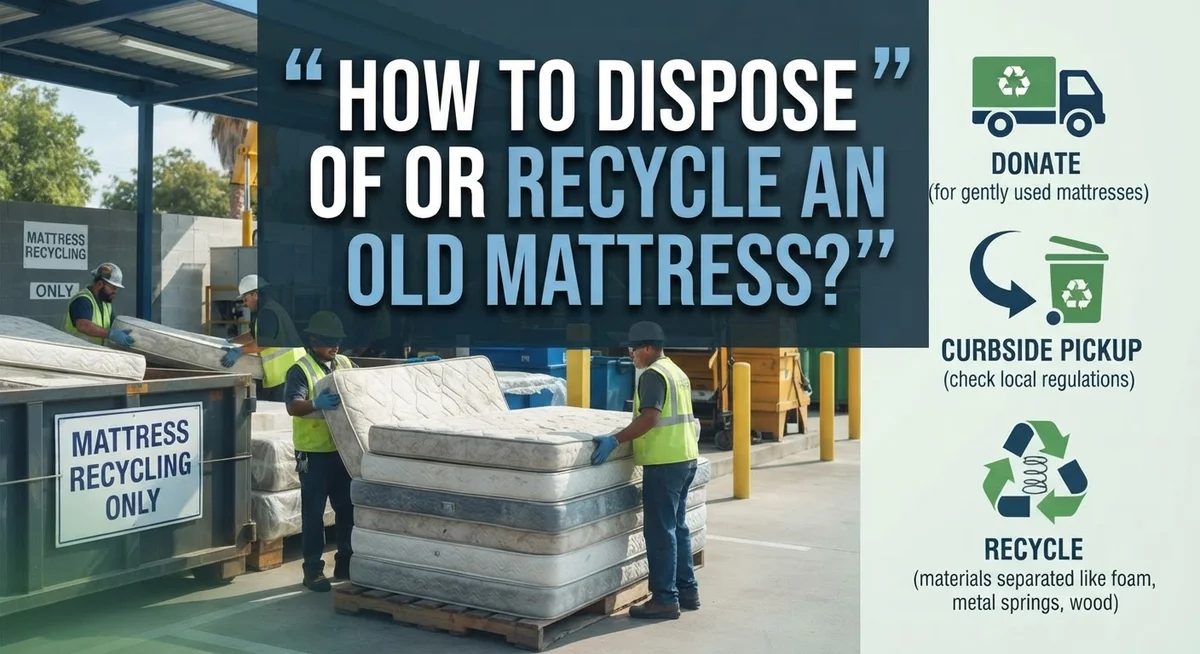
How to Dispose of or Recycle an Old Mattress?
Got an old mattress taking up space? You are not alone. Every year, millions of mattresses get tossed out. Many end up in landfills, where they take up huge amounts of space.
But here’s the good news. Most mattresses do not belong in the trash. In fact, more than 75% of mattress materials can be recycled. Steel springs, foam, and fabric can all get a second life.
This article shows you how to dispose of or recycle your old mattress the right way. We will walk through donation options for mattresses still in good shape. You will also learn about local recycling centers and how to find one near you.
We cover bulk waste pickup services and professional disposal companies too. Some states even require retailers to take back your old mattress. California, for example, offers free drop off locations for residents.
You will also get simple safety tips if you plan to take apart your mattress yourself. By the end of this guide, you will know exactly which option fits your situation best.
In a Nutshell
Here’s a quick look at how to get rid of your old mattress the right way.
-
Check condition first. If your mattress is clean and in good shape, donation is a great option. Local groups, Buy Nothing, and Facebook Marketplace can help it find a new home.
-
Look into recycling centers. Most mattresses are over 75% recyclable. Call ahead to confirm your local center accepts them.
-
Contact your city or town. Rules for mattress disposal vary by location. Your public works or health department can guide you.
-
Consider bulk waste pickup. Many cities offer this service for large items like mattresses. Some may charge a small fee.
-
Try retailer take back programs. Some states, like California, require stores to accept old mattresses for recycling.
-
Disassemble it yourself if needed. Wear heavy gloves and use a utility knife to separate foam, fabric, and springs safely.
Each method fits different needs and situations. Pick the one that works best for your mattress and your area.
Why Proper Mattress Disposal Matters
Mattresses end up in landfills at an alarming rate, but they don’t have to. Proper disposal matters because mattresses take up massive amounts of space and sit there for decades without breaking down.
The environmental impact is real. A single mattress occupies roughly 40 cubic feet of landfill space. When thousands of mattresses pile up each year, that space adds up fast. Landfills become overcrowded, and cities struggle to manage waste efficiently.
Here’s the good news: most mattress materials are recyclable. Steel springs get melted down and reused. Foam layers become carpet padding or insulation. Fabric covers turn into wiping cloths or stuffing for other products. This means your old mattress can have a second life instead of rotting away.
Proper disposal also protects your community. Mattresses dumped illegally create eyesores and attract pests. They block waterways and contaminate soil. By choosing the right disposal method, you help keep neighborhoods clean and safe.
There’s another reason to care: many states now regulate mattress disposal. Some areas charge fees for illegal dumping. Others require retailers to take back old mattresses when you buy new ones. Understanding these rules saves you money and headaches.
Disposing responsibly also supports local recycling programs. These facilities need steady material flow to stay operational. When you recycle your mattress, you help keep these programs running and create jobs in your area.
The bottom line is simple: proper mattress disposal protects the environment, keeps communities clean, and supports local recycling efforts. You have multiple options available, and choosing the right one takes just a few phone calls.
Assessing Your Mattress: Donate, Recycle, or Discard?
Before you throw away your mattress, take a moment to assess its condition. This simple step helps you choose the best disposal method and might even benefit someone else.
Start by checking the mattress surface. Look for stains, odors, or visible damage like tears and holes. A mattress with minor wear can still find a new home. Clean mattresses in decent shape are perfect candidates for donation.
Next, consider the structural integrity. Press down on different areas. Does it feel lumpy or saggy? Are the edges collapsing? These signs suggest the mattress has reached the end of its life. Such mattresses work better for recycling programs instead of donation.
Think about who might use it. Would you feel comfortable giving this mattress to someone else? If yes, donation makes sense. If the answer is no, recycling or disposal is the right choice.
Check for pest problems. Bed bugs or other infestations mean donation is not an option. These mattresses need professional disposal to prevent spreading the problem to other homes.
Evaluate moisture and mold. Wet or moldy mattresses pose health risks. Most recycling centers and donation programs won’t accept them. Check your local guidelines for disposal options in these cases.
Document the mattress age. Older mattresses may have outdated materials or construction issues. Newer mattresses from the last five to ten years are more likely to be donated successfully.
Once you finish your assessment, you’ll know exactly which path to take. A good mattress deserves a second life through donation. A worn out mattress belongs in a recycling program. This simple evaluation saves time and helps you make the most responsible choice.
How to Donate a Mattress in Good Condition
Donating a mattress in good condition is one of the most rewarding disposal options. It keeps your mattress out of landfills and helps someone in need.
Start by confirming your mattress truly qualifies for donation. Check the surface carefully for stains, tears, or odors. Press on different areas to feel for sagging or lumps. The mattress should feel supportive and comfortable. If you wouldn’t sleep on it yourself, it’s not ready to donate.
Contact local charities and nonprofits in your area. Many organizations accept mattress donations, including homeless shelters, women’s shelters, and community assistance programs. Call ahead to ask about their specific requirements and pickup options.
Social media groups work well too. Try Buy Nothing, Freecycle, or Facebook Marketplace. These platforms connect you with people actively seeking free items. Post clear photos and mention the mattress age and condition. Be honest about any minor wear.
Craigslist also lists free mattresses regularly. Set up a specific pickup time and location. Make sure someone is home when they arrive.
Some religious organizations and furniture banks accept donations. Search online for “mattress donation near me” to find local options quickly.
Before donation day, prepare your mattress properly. Vacuum it thoroughly and let it air out. If possible, place it in a clean plastic bag to protect it during transport. Remove any stains you can with mild soap and water.
Always confirm pickup or drop off details beforehand. Ask whether the organization provides transportation or if you need to arrange it. Some groups offer free pickup for large donations, which saves you time and effort.
Step-by-Step: Preparing and Disassembling a Mattress for Recycling
Before you disassemble a mattress, prepare your workspace and gather the right tools. Work outdoors or in a well ventilated area since dust and debris will fly during disassembly. Lay the mattress flat on a clean surface like a tarp or concrete pad.
Wear heavy gloves throughout the entire process. Mattress coils are sharp and can cut your hands easily. Safety glasses also help protect your eyes from flying particles and dust.
Gather basic tools you likely have at home. You’ll need a utility knife, scissors, and a marker. A seam ripper works well for opening stitched seams. Have garbage bags ready for sorting materials.
Start by cutting away the fabric cover. Use your utility knife to slice along the seams carefully. Once removed, you can separate the foam layers underneath. Cut through foam sections into manageable pieces. This makes sorting and transport much easier.
Next, address the steel springs. Cut through the burlap or fabric that holds the spring unit together. Separate individual springs from the frame if your recycling center requires it. Some centers accept springs still attached to the frame, so check first.
Organize materials into piles: foam, springs, wood, and fabric. Keep each material type separate for easier recycling. Steel springs should go in one container since they’re valuable for metal recycling programs.
Before starting, contact your local recycling center to confirm what they accept and how they want materials prepared. Some centers prefer mattresses whole, while others want disassembled components. This conversation saves you time and effort. Always follow their specific guidelines for the best results.
Local Recycling Centers and Municipal Programs
Local recycling centers and municipal programs offer straightforward ways to handle old mattresses. These facilities accept mattress materials because over 75% of components can be recovered and reused.
Start by checking your city or town regulations. Contact your local health department, public works office, or recycling department first. They can tell you exactly which facilities near you accept mattresses and what rules apply.
Call ahead before visiting any recycling center. Ask if they accept whole mattresses or require disassembly. Some centers want materials separated into foam, springs, wood, and fabric. Others handle the separation themselves. Getting this information prevents wasted trips.
Many municipalities offer bulk waste collection services. These programs pick up large items like mattresses directly from your home on scheduled days. Check your local waste management website or call their customer service line to learn pickup dates and any preparation steps required.
Some areas have special mattress recycling programs. California, for example, offers free drop-off locations at participating facilities. Other states may charge small fees. Always confirm costs and hours before going.
If your mattress is too damaged for donation but still recyclable, municipal programs are ideal. Soiled or stained mattresses often qualify for recycling even when donation isn’t possible. The facility staff will determine what materials can be recovered.
Keep documentation of where you dispose of your mattress. Some areas track mattress recycling for environmental reporting. You may need proof of proper disposal for warranty or rental agreement purposes.
Municipal programs represent an environmentally responsible choice. They ensure materials get properly processed instead of sitting in landfills for years.
Retailer Take-Back and State-Mandated Recycling Programs
Many retailers offer take-back programs when you purchase a new mattress. These programs remove your old mattress during delivery of your new one. This convenience saves you time and effort.
Some states legally require retailers to participate in mattress recycling programs. California leads with mandatory take-back laws. Other states continue expanding these requirements. Check your state’s regulations to understand what retailers must offer.
How retailer programs work is straightforward. When you schedule delivery of a new mattress, inform the delivery team about your old one. They typically haul away the used mattress at no additional charge. Some retailers charge a small fee, so ask about costs upfront.
State-mandated programs ensure mattresses reach proper recycling facilities instead of landfills. These programs recover foam, springs, and wood for reuse. The recovered materials become new products like carpet padding or insulation.
To use a retailer take-back program, contact the store directly before purchase. Ask whether they offer this service in your area. Confirm what happens to your mattress after pickup. Some retailers partner with certified recycling facilities.
Not all retailers participate equally. Smaller local businesses may have different options than large chains. Always verify availability for your specific location and mattress type.
State programs sometimes offer drop-off locations separate from retail stores. Contact your state’s environmental or waste management department for a list. These facilities accept mattresses free or for a minimal fee.
Keep your receipt showing mattress disposal. This documents proper handling of your old mattress. Documentation proves environmental responsibility if needed later.
Safety Precautions During Mattress Disposal
Safety should be your top priority when disposing of or recycling an old mattress. Mattresses contain sharp materials that can cause serious injuries if you handle them incorrectly.
Wear heavy-duty gloves at all times. Mattress coils are extremely sharp and can cut through skin easily. Even small punctures from these metal springs can become infected. Never touch the interior springs or coils with bare hands, even briefly.
Use proper tools for any disassembly work. A utility knife and scissors are essential for cutting fabric covers safely. Keep your fingers away from the blade at all times. Cut slowly and deliberately rather than rushing through the process.
Protect your eyes and respiratory system. Old mattresses can contain dust, mold spores, and other particles that become airborne during handling. Wear safety glasses to keep debris out of your eyes. Consider wearing a dust mask if you’re disassembling a mattress indoors or if it shows signs of mold or mildew.
Lift properly to avoid back injuries. Mattresses are heavy and awkward to move. Bend at your knees, not your back. Ask someone to help you carry the mattress rather than attempting to move it alone.
Check the mattress condition before starting work. If it contains visible mold, bedbugs, or severe staining, avoid direct contact. Some facilities won’t accept heavily soiled mattresses anyway.
Clear your workspace of obstacles before moving the mattress. Trip hazards can cause falls or dropped mattresses that injure your feet or toes.
Follow all local regulations for disposal. Some areas have specific rules about how and where you can discard mattress materials. Contact your local waste management department for guidance.
Common Mistakes to Avoid When Disposing of a Mattress
Many people make costly errors when they try to get rid of old mattresses. Understanding these mistakes helps you avoid problems and dispose responsibly.
Dumping illegally is the biggest mistake people make. Leaving a mattress on the curb, in an alley, or on public land violates local laws. You could face fines or legal action. Always use approved disposal methods instead.
Failing to check local rules before disposal wastes your time and effort. Different cities have different regulations. Some areas ban mattresses from regular trash pickup. Call your local waste management department first to learn what’s allowed in your area.
Not verifying that recycling centers accept mattresses causes frustration. Many facilities have specific rules about what they take. A quick phone call prevents a wasted trip with a heavy mattress in your vehicle.
Attempting DIY disassembly without proper preparation creates safety risks and mess. People often underestimate how difficult it is to separate springs, foam, and fabric. If you choose to disassemble, gather the right tools and wear protective gear beforehand.
Donating a mattress in poor condition disappoints recipients and wastes their time. Check the mattress carefully before offering it to someone. Stains, odors, bed bugs, or deep sagging make donation inappropriate. Be honest about the mattress condition.
Ignoring expiration dates on donation pickup services causes scheduling conflicts. When you arrange a donation pickup, follow the agreed timeline. Missing appointments wastes resources and frustrates charities.
Forgetting to document your disposal creates problems if questions arise later. Keep receipts or confirmation numbers from recycling centers or disposal services. This proof shows you disposed of the mattress properly and responsibly.
Final Thoughts
Getting rid of an old mattress does not need to feel hard. You have many options to choose from today.
You can donate it if it stays clean and useful. You can recycle it at a center near you. You can also use a retailer program or bulk pickup service.
Planning ahead makes the whole process smoother. Check your local rules first. Call your recycling center to confirm they accept mattresses.
Remember that safety comes first during every step. Wear gloves. Use the right tools. Lift with care to protect your back.
Most mattresses contain materials that can be reused. Foam, metal, and fabric often get a second life. This helps cut down waste in landfills.
Avoiding common mistakes saves you time and stress. Do not dump your mattress illegally. Do not skip checks with local recycling centers.
Think about your mattress condition before you choose a method. A clean mattress works well for donation. A damaged one may need recycling or disposal instead.
Every state and city has its own rules. Some areas offer special programs for old mattresses. Others may need extra steps for pickup or drop off.
Take a little time to research your options. This small effort helps you avoid problems later. It also supports a cleaner environment for everyone.
Disposing of a mattress responsibly protects your health and the planet. It keeps harmful waste out of landfills. It also gives materials a new purpose.
With the right steps, you can dispose of or recycle your mattress easily. Stay safe, plan well, and choose the method that fits your needs best.
Frequently Asked Questions
Can I donate my mattress to someone who needs it?
Yes, you can donate a mattress if it is in good condition. The mattress must be clean, free from stains, and have no odors. Local community groups often accept donations. You can also list it on Buy Nothing, Freecycle, Craigslist, or Facebook Marketplace.
Contact your local charity or thrift store first. They will tell you if they accept mattresses and what condition they require. Some organizations offer free pickup service for donations.
What if my mattress is stained or has damage?
Soiled or damaged mattresses have limited options. Most charities and recycling centers will not accept them. Check your local health department or public works office for guidance on disposal rules in your area.
Your city may have special bulk waste collection days. Professional disposal services can remove damaged mattresses for you. Some areas offer this service free or for a small fee.
Where can I recycle my mattress?
Contact your local recycling center first to confirm they accept mattresses. Not all centers take them, so verification is important. Your city or town’s public works department can tell you which facilities recycle mattresses nearby.
Some retailers offer take back programs when you buy a new mattress. California and a few other states have laws requiring free drop off at certain locations. Check your state’s regulations before visiting a facility.
How much of a mattress can actually be recycled?
Over 75 percent of mattress materials are recyclable. The foam layers, springs, and wood frame all have value. Recycling facilities separate these materials and send them to manufacturers who use them in new products.
This process keeps mattress waste out of landfills. It also reduces the need for new raw materials. Recycling is one of the best ways to handle old mattresses responsibly.

DK is the founder of Deep Slumber Finds, where he combines a genuine passion for quality sleep with thorough product research to help readers make confident buying decisions. When he’s not testing mattresses or comparing pillows, you’ll find him exploring the latest sleep science and hunting down the best deals so you don’t have to.


