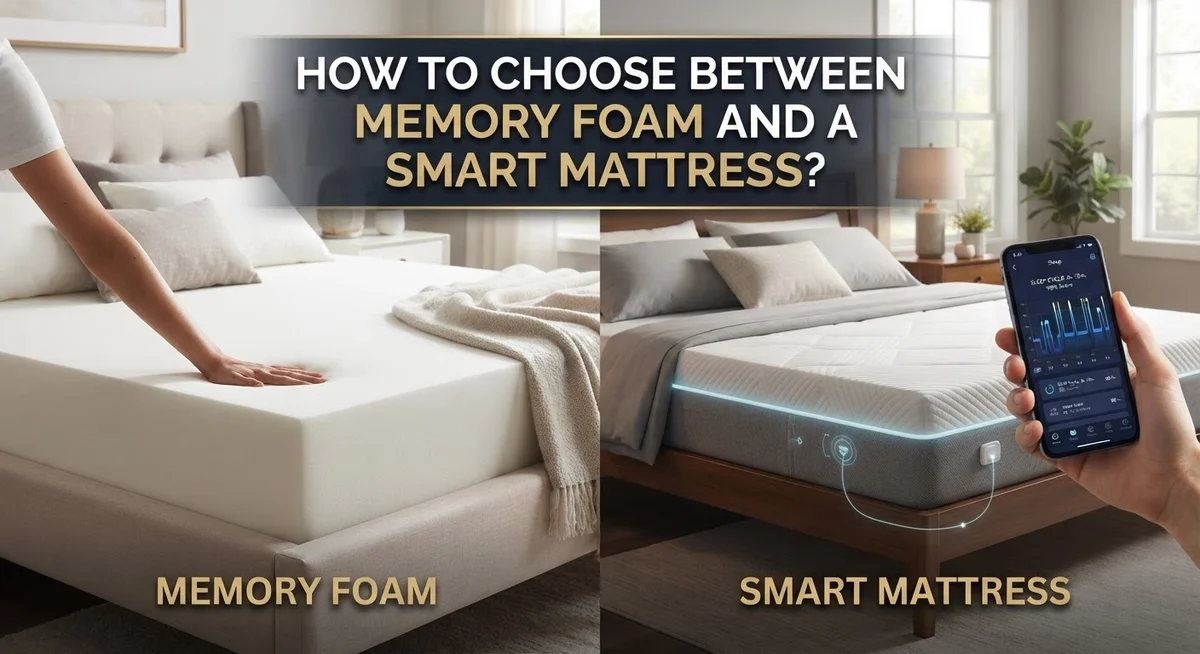
How to Choose Between Memory Foam and a Smart Mattress?
Choosing a new mattress feels like a big decision. You spend almost a third of your life sleeping on it. So the choice between memory foam and a smart mattress really matters.
Memory foam has been a popular pick for years. It molds to your body shape. It uses your body heat and weight to create a snug, pressure relieving feel.
Smart mattresses bring new technology into your bedroom. They can track your heart rate, breathing, and sleep patterns. Many models also let you adjust firmness and improve cooling.
Both options offer real benefits. But they work in very different ways. Your choice depends on what you value most in a good night’s sleep.
This article will help you understand the core differences between these two mattress types. We will look at comfort, support, breathability, and technology features.
You will also learn about common mistakes people make when choosing a mattress. By the end, you will feel confident picking the right option for your body and your sleep habits.
In a Nutshell
Here’s a quick summary to help you decide:
-
Memory foam molds to your body shape. It uses your body heat and weight to create a snug, pressure relieving feel. Both sides of the mattress stay the same firmness.
-
Smart mattresses track your sleep data. They can monitor your heart rate, breathing, and movement while you sleep.
-
Smart beds let each person adjust their own side. This works well if you and your partner like different firmness levels.
-
Cooling matters for many sleepers. Smart mattresses often cool down much faster than traditional memory foam.
-
Memory foam tends to trap more heat. If you sleep hot, this is something to think about.
-
Always test a mattress before you buy it. In-store trials help you feel the real comfort and support levels.
-
Think about your priorities first. Do you want simple comfort, or do you want data and adjustable features too?
Your final choice depends on what matters most to you: classic comfort or modern technology.
What Is Memory Foam and How Does It Work?
Memory foam is a special type of foam that responds to your body’s heat and weight. When you lie down, the material softens and molds around your shape. This creates a custom fit that feels like the mattress is hugging you.
The foam contains millions of tiny cells that are open and connected. These cells absorb and distribute your body heat evenly. As the foam warms up, it becomes softer and more flexible. When you move or get up, it slowly returns to its original shape.
Pressure relief is one of the main benefits of memory foam. The contouring action reduces stress on your joints and pressure points. This can help people with back pain or shoulder tension sleep more comfortably.
Memory foam mattresses typically have multiple layers. The top layers provide that signature contouring feel. The bottom layers offer support and stability. Together, these layers prevent you from sinking too far into the bed.
One trade off is breathability. Memory foam tends to retain heat because it’s denser than other materials. Your body heat gets trapped in the foam rather than escaping into the air. This can make the mattress feel warm, especially during hot nights or for people who naturally sleep hot.
The response time matters too. Some memory foam is fast responding and bounces back quickly. Other types are slow responding and take longer to adjust to movement. Your personal preference determines which feels better to you.
Memory foam comes in different density levels. Higher density foam lasts longer but may feel firmer. Lower density foam feels softer but may break down faster over time. Understanding these basics helps you compare memory foam options with other mattress types like smart beds.
What Is a Smart Mattress and How Does It Work?
A smart mattress is a bed equipped with electronic sensors and technology built into its structure. These sensors monitor your sleep patterns and body metrics throughout the night. The mattress collects data on your heart rate, breathing patterns, and heart rate variability while you sleep.
Smart mattresses adjust their firmness automatically based on your sleep position and preferences. Many models allow each side of the bed to have different firmness levels. This means your partner can have a softer feel while you enjoy a firmer surface, all on the same mattress.
The cooling system in smart mattresses works differently than traditional beds. These systems can cool up to 8 times faster than standard memory foam options. Water or air circulation technology pumps temperature controlled air through the mattress layers to keep you comfortable throughout the night.
Smart mattresses often use hybrid construction. This means they combine coils, foam, and gel layers together. The combination provides both support and pressure relief while maintaining better airflow than pure memory foam.
The electronic components connect to your smartphone through an app. You can view your sleep data, adjust firmness settings, and track sleep quality over time. Some models also provide insights about your rest patterns and suggest improvements.
These mattresses require a power source to operate. You’ll need to plug the bed into an outlet for the cooling system and sensors to function properly. Battery backup systems are sometimes included for power outages.
Smart mattresses represent a significant leap from traditional beds. They blend comfort technology with health monitoring capabilities. Your choice depends on whether you value advanced sleep tracking and adjustability or prefer a simpler, more traditional sleeping surface.
Key Differences in Construction and Materials
Memory foam and smart mattresses use completely different construction approaches. Understanding these differences helps you pick the right bed for your needs.
Memory foam construction relies on stacked foam layers. The base typically includes high density support foam. Above that sits softer memory foam that contours to your body. This layering creates pressure relief by distributing your weight evenly. The foam responds to your body heat and gradually molds around you. Most memory foam beds have the same firmness on both sides. You cannot adjust the feel once the mattress is made.
Smart mattresses use varied construction methods. Many combine coils with foam or gel layers. Others use hybrid designs that blend multiple materials together. The key difference is the addition of electronic sensors embedded throughout. These sensors track your heart rate, breathing patterns, and sleep movements. Smart beds connect to an app on your phone. You control firmness adjustments through the app. Many smart mattresses let each partner choose different firmness levels on their side.
Breathability differs significantly between the two types. Memory foam tends to trap heat because the dense foam restricts airflow. Smart mattresses often include cooling technology that works up to 8 times faster. They use gel infusions, water channels, or specialized fabrics to release heat. This makes smart beds better for hot sleepers.
Material quality matters for both options. Memory foam density ranges from low to high. Higher density foam lasts longer but feels firmer. Smart mattresses vary in their core materials too. Some use premium coils while others use foam bases. Your choice depends on whether you want simple contouring or advanced technology with adjustability.
Comparing Comfort, Support, and Pressure Relief
Memory foam and smart mattresses offer different approaches to comfort, support, and pressure relief. Understanding how each works helps you pick the right one for your needs.
Memory foam excels at pressure relief because it molds directly to your body shape. The foam responds to your body heat and weight, creating a custom surface that reduces pressure points on your shoulders, hips, and lower back. This contouring effect makes memory foam popular for side sleepers and people with joint pain.
Smart mattresses handle pressure relief differently. They use adjustable firmness zones that adapt to your sleep position throughout the night. If you shift from your side to your back, the mattress can automatically adjust its support level. This active adaptation prevents pressure buildup in different areas.
Support quality depends on core materials in both types. Memory foam provides consistent support through its dense structure. Smart mattresses often use hybrid construction, combining coils with foam layers to offer both support and responsiveness. Coils typically provide more bounce and faster response than foam alone.
Cooling and breathability matter for comfort during long sleep sessions. Memory foam tends to trap heat because the dense material restricts airflow. Smart mattresses cool faster, sometimes up to 8 times quicker than traditional options, because their hybrid construction allows better air circulation. Many smart mattresses also include active cooling systems.
Your choice depends on what matters most. Choose memory foam if you want pressure relief and a hugging sensation without technology. Pick a smart mattress if you need adjustable support, active cooling, and health tracking features. Both can provide excellent support when they match your body type and sleeping style.
Temperature Regulation and Breathability Explained
Memory foam and smart mattresses handle temperature very differently. Understanding these differences helps you pick the right bed for your sleep style.
Memory foam traps heat naturally. The dense foam absorbs and holds your body warmth. This happens because air cannot flow freely through the material. If you sleep hot, memory foam may feel uncomfortable during the night. The foam retains heat even with gel infusions added to the top layer. Some people find this cozy in winter. Others wake up sweating in summer.
Smart mattresses cool much faster. Many use active cooling systems that pump cool water or air through the bed. These systems can reduce surface temperature by up to eight times faster than memory foam alone. You control the temperature through your phone app. This means each side of the bed can have different cooling levels. Your partner can stay warm while you stay cool.
Breathability refers to how easily air moves through your mattress. Memory foam has low breathability because the material is tightly packed. Smart mattresses often have better airflow, especially hybrid models that combine coils with foam. Coils create air pockets that let heat escape more easily.
Your sleep climate matters here. Hot sleepers benefit from smart mattresses with cooling features. Cool sleepers or cold climates might suit memory foam better. Consider your bedroom temperature and personal heat output. Test both types if possible before deciding. Lie down for at least ten minutes to feel the temperature difference. Your comfort during sleep depends heavily on how well the mattress manages heat throughout the night.
Step-by-Step Guide to Evaluating Your Sleep Needs
Understanding your sleep needs is the foundation for choosing between memory foam and a smart mattress. Start by identifying how you sleep. Do you sleep on your back, side, or stomach? Each position requires different support levels.
Next, assess your temperature preferences. Are you a hot sleeper who wakes up sweating? Or do you feel cold at night? Memory foam retains heat naturally, while smart mattresses offer active cooling systems that work faster. This matters significantly for sleep quality.
Consider your pressure point concerns. Do you experience pain in your hips, shoulders, or lower back? Memory foam molds to your body shape and provides targeted pressure relief. Smart mattresses handle pressure differently through their construction, so think about which approach appeals to you.
Evaluate your partner’s needs if you share a bed. Memory foam offers the same firmness on both sides. Smart mattresses allow each person to adjust their side independently, which solves compatibility issues for couples with different preferences.
Think about health tracking features. Do you want to monitor your sleep patterns? Smart mattresses track heart rate, breathing, and sleep stages. Memory foam offers no tracking capabilities. If data interests you, this becomes important.
Test your current mattress honestly. What frustrates you most? Is it heat buildup, lack of support, or inability to adjust firmness? Your complaints point toward the solution you need.
Also consider your lifestyle. Do you travel frequently? Memory foam is portable and simple. Smart mattresses require electricity and setup, making them less convenient for frequent moves.
Write down your top three sleep concerns. Rank them by importance. This exercise clarifies which mattress type aligns with your actual needs rather than marketing claims.
Common Mistakes to Avoid When Deciding
Many people make costly mistakes when choosing between memory foam and smart mattresses. Understanding these errors helps you avoid wasting money on the wrong bed.
Ignoring your actual sleep position is a common error. Side sleepers need different support than back sleepers. Memory foam contours well for side sleepers. Smart mattresses offer adjustable firmness that works for multiple positions. Test your preferred sleeping position before deciding.
Focusing only on price leads to poor choices. Cheaper options in either category often lack durability. A budget bed may feel good for two months, then sag or lose cooling ability. Consider long term value, not just upfront cost.
Skipping the in store trial is a major mistake. You cannot know if a mattress works for you without lying on it. Spend at least 10 to 15 minutes testing each option. Try your normal sleep position. Notice how your body feels.
Overvaluing unnecessary features wastes your money. Smart mattresses offer health tracking and app controls. These sound impressive but may not improve your sleep quality. Focus on core features like support, cooling, and pressure relief instead.
Not considering your sleep partner’s needs causes relationship friction. One person may want firmness while the other prefers softness. Smart mattresses solve this with adjustable sides. Memory foam does not. Discuss preferences before purchasing.
Assuming all memory foam feels the same is incorrect. Density varies significantly. Cheap memory foam feels mushy. Quality memory foam provides firm support with contouring. Test different densities to find your preference.
Neglecting to research return policies leaves you stuck with a bad purchase. Mattress return windows vary greatly. Some companies offer 30 days. Others give 100 days. Check this before buying.
Tips for Testing and Comparing Mattresses In-Store
When you visit a mattress store, you have the perfect chance to test both memory foam and smart mattresses side by side. This hands on approach reveals details that online research cannot show you.
Start by lying on each mattress for at least 5 to 10 minutes. Your body needs time to settle and adjust. Don’t rush this step. Notice how the surface feels under your shoulders, hips, and lower back. Memory foam will feel like it’s slowly hugging your body. Smart mattresses may feel firmer initially, but pay attention to how they support your spine alignment.
Test your typical sleep position on both options. If you sleep on your side, check if pressure relief happens at your shoulders and hips. Back sleepers should feel support under the natural curve of their spine. Stomach sleepers need to notice if their lower back sags or stays supported.
Press your hand into the surface and feel the response. Memory foam resists slowly and stays compressed. Smart mattresses often respond faster and bounce back quicker. This tells you about the underlying support structure.
Ask the staff to adjust the firmness on smart mattresses if they offer this feature. Feel the difference between settings. This matters because you cannot change memory foam firmness later.
Bring your sleep partner if possible. Have them lie down too. Notice if one person’s movements transfer to the other side. Memory foam typically isolates motion well. Smart mattresses vary depending on their internal design.
Take notes about temperature while lying down. Does one mattress feel warmer than the other? Your personal heat preference matters greatly for long term satisfaction.
Finally, ask about trial periods. Most stores offer return windows. This safety net lets you test your choice at home before committing fully.
Final Thoughts
Choosing between memory foam and a smart mattress comes down to your personal sleep needs. Both options offer real benefits, but they solve different problems.
Memory foam works well if you want simple, reliable pressure relief. It molds to your body and stays firm on both sides. This makes it a solid choice for single sleepers or couples with similar preferences.
Smart mattresses suit people who want more control. You get adjustable firmness, better cooling, and health tracking features. These extras help if you run hot at night or share a bed with someone who needs different support.
Think back to what matters most to you. Your sleep position, temperature preferences, and budget all play a role here. Your partner’s needs matter too if you share a bed.
Remember the mistakes we covered. Don’t skip the in-store trial. Don’t focus only on price or features you might never use.
Testing both mattress types in person gives you the clearest answer. Lie down, check your usual sleep position, and pay attention to how your body feels after several minutes.
There’s no single right choice for everyone. A back sleeper who runs cold might love memory foam. A hot sleeper with a restless partner might prefer a smart mattress with dual adjustability.
Trust the research you’ve gathered, but also trust your own comfort. Your body knows what feels right much better than any spec sheet does.
Take your time with this decision. A mattress lasts for years, so a little extra effort now pays off with better sleep later.
Frequently Asked Questions
Does memory foam sleep hot compared to smart mattresses?
Memory foam absorbs and retains body heat. This happens because the foam is less breathable than other materials. Smart mattresses cool faster, up to 8 times quicker than traditional memory foam. Many smart beds include cooling technology built into the surface layer.
If you sleep hot naturally, a smart mattress may feel more comfortable. Memory foam works better for people who don’t overheat at night. Your personal temperature needs matter most here.
Can you adjust firmness on a memory foam mattress?
No. Memory foam comes with one fixed firmness level on both sides. Once you buy it, you cannot change how firm or soft it feels. This is different from smart mattresses, which offer adjustable firmness settings.
You must choose the right firmness before purchasing. Testing in a store helps you find the perfect level for your body.
What’s the main difference in how these mattresses support your body?
Memory foam molds to your body weight and heat. It provides pressure relief by conforming to your shape. Smart mattresses use adjustable technology to support different areas of your body separately.
Smart beds can firm up under your lower back and soften under your shoulders. Memory foam treats your entire body the same way. Both approaches work well, but they support your body differently.
Do smart mattresses work for couples with different sleep preferences?
Yes. Smart mattresses let each partner adjust their side independently. One person can have a firm side while the other sleeps on a soft side. Memory foam cannot do this because both sides have identical firmness.
If you and your partner have different comfort needs, smart mattresses solve this problem. Memory foam requires compromise from at least one person.

DK is the founder of Deep Slumber Finds, where he combines a genuine passion for quality sleep with thorough product research to help readers make confident buying decisions. When he’s not testing mattresses or comparing pillows, you’ll find him exploring the latest sleep science and hunting down the best deals so you don’t have to.