How to Decide Between Foam, Hybrid, and Innerspring Mattresses?
Picking a new mattress feels like a big decision. You lie down on a few options at the store, and they all seem fine. But weeks later, on your own bed, the differences become clear.
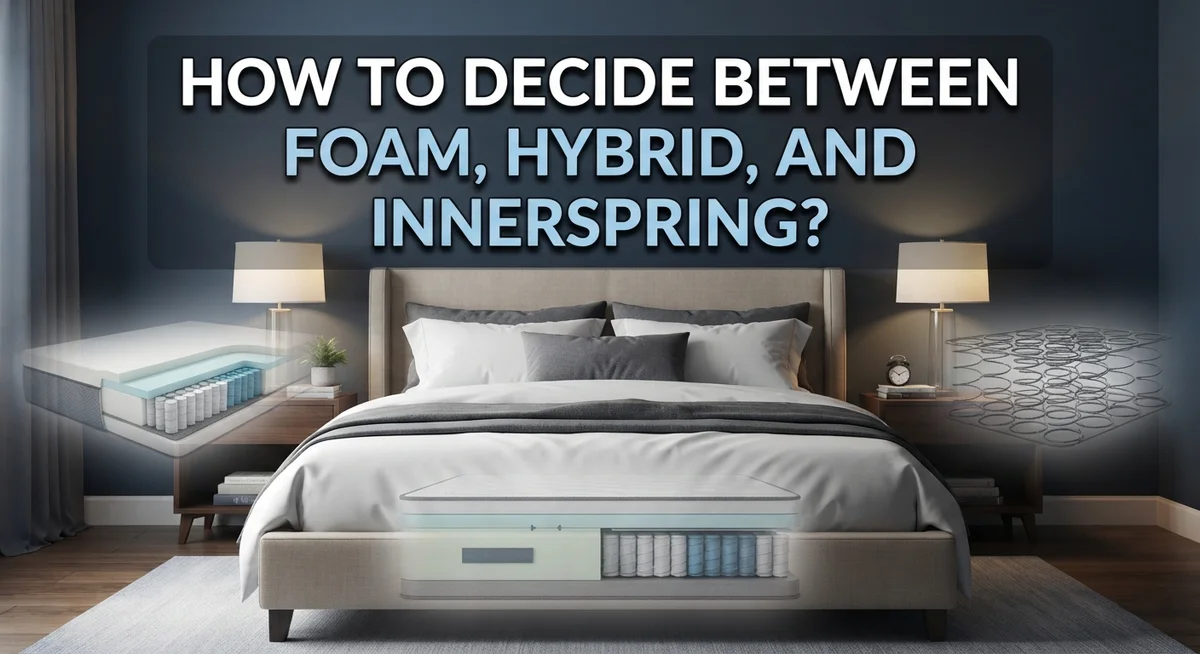
Foam, hybrid, and innerspring mattresses each offer a different sleep experience. Foam hugs your body and relieves pressure points. Innerspring gives you that classic bounce and keeps you cool at night. Hybrid tries to give you both, blending foam comfort with coil support.
The right choice depends on how you sleep. Side sleepers often need more cushioning. Back and stomach sleepers may want firmer support. People who switch positions all night need a mattress that keeps up with them.
Your budget matters too. So does how hot you tend to sleep.
This guide breaks down each mattress type in simple terms. You will learn what makes each one different, who benefits most from each type, and the common mistakes people make when choosing. By the end, you will know exactly which mattress type fits your needs.
In a Nutshell
Here’s a quick breakdown to help you choose fast:
-
Foam mattresses hug your body closely. They relieve pressure points well. But they can trap heat and feel warm at night.
-
Innerspring mattresses use coils for a bouncy feel. They cost less than other types. Air flows freely through the coils, keeping you cool.
-
Hybrid mattresses combine foam layers with coil support. They give you contouring comfort plus responsive bounce. This mix works well for many sleepers.
-
Side sleepers often do best with hybrids. The foam cushions hips and shoulders nicely.
-
Sleepers who switch positions may prefer innerspring beds. The bounce makes moving around easier.
-
Budget matters too. Innersprings are usually the most affordable option. Hybrids cost more due to their layered design.
A true hybrid needs real foam and real coils together. Some brands mislabel a thin foam layer over springs as hybrid. Always check the layer details before buying.
Your sleep position, temperature needs, and budget will guide your final pick.
What Sets Foam, Hybrid, and Innerspring Mattresses Apart
Memory foam works by responding to your body heat and weight. When you lie down, the material softens and molds around your shape. This creates a cradling sensation that many people find comfortable. The foam then slowly returns to its original form when you get up.
Innerspring mattresses use metal coils as their core support system. These coils compress when you apply pressure and bounce back quickly. This responsive action gives innerspring beds their characteristic bounce. The coil structure also allows air to flow freely through the mattress, which helps keep the surface cool.
Hybrid mattresses combine both approaches. They have a foam layer on top that provides contouring and pressure relief. Underneath sits a coil layer that offers support and bounce. The foam and coils work together to balance comfort with responsiveness.
Heat retention differs significantly between these types. Foam mattresses tend to trap body heat because the material absorbs warmth. Innerspring mattresses stay cooler since air circulates around the coils. Hybrid mattresses fall somewhere in the middle, though the top foam layer can still hold some heat.
Motion transfer also varies. Memory foam absorbs movement, so if your partner tosses and turns, you’ll feel less disturbance. Innerspring coils transfer motion more easily across the surface. Hybrid mattresses with pocketed coils (individual wrapped springs) reduce motion transfer better than traditional interconnected coils.
Durability depends on construction quality. Foam can compress over time with regular use. Innerspring coils may weaken or develop squeaks. Hybrids combine the longevity concerns of both materials, so the overall lifespan depends on how well each layer is made.
Understanding these core differences helps you match the mattress type to your actual sleep needs and preferences.
How Each Mattress Type Affects Sleep Position and Body Support
Your sleep position is one of the most important factors when choosing between these three mattress types. Each one supports your body differently, and the wrong choice can leave you uncomfortable or with pain.
Side sleepers benefit most from hybrid mattresses. Your shoulders and hips need extra cushioning when you sleep on your side. Hybrids provide foam layers that contour around these pressure points while coils underneath prevent you from sinking too deep. This combination keeps your spine aligned without excess sag.
Back sleepers do well with all three types, but hybrids and innersprings work especially well. You need support under your lower back to maintain proper spinal alignment. Innerspring mattresses give you that firm, responsive support. Hybrids offer similar support with added pressure relief on your shoulders and lower back from the foam layer.
Stomach sleepers should lean toward innerspring or hybrid options. These types prevent your hips from sinking too far into the mattress, which keeps your spine straight. All foam mattresses often feel too soft for stomach sleepers and can cause lower back strain over time.
Active sleepers who move around and change positions during the night prefer innerspring mattresses. The bouncy coil system makes it easier to shift positions without feeling stuck. You won’t sink into the bed, so rolling over happens naturally.
Combination sleepers who switch between positions benefit from hybrids. You get enough support for back sleeping and enough cushioning for side sleeping. The balanced design works across multiple positions without forcing compromises.
Pay close attention to how you actually sleep. Many people think they sleep one way but move around more than they realize. Your mattress choice should match your real sleep habits, not just your preferred starting position. This ensures you get proper support throughout the entire night.
Comparing Temperature Regulation and Airflow Across Types
Temperature control matters a lot when you sleep. Each mattress type handles heat differently, and knowing these differences helps you stay comfortable all night.
Innerspring mattresses excel at cooling. The metal coils create air channels throughout the bed. Air flows freely between these coils, which helps heat escape quickly. This design makes innerspring beds ideal if you sleep hot or live in warm climates. The simple structure means less material traps your body heat.
Foam mattresses retain more heat. Memory foam responds to your body temperature and weight. This response feels great for pressure relief, but it also means heat stays closer to your body. The foam layers absorb warmth instead of letting it move away. If you tend to wake up sweaty, all foam options might not suit you well.
Hybrid mattresses offer a middle ground. They combine foam layers on top with coils below. The foam gives you contouring comfort while the coils underneath allow airflow. This balance helps many sleepers stay cooler than they would on all foam, but warmer than on pure innerspring.
Several factors affect how warm you’ll feel. The thickness of foam layers matters. Thicker foam layers trap more heat. The type of foam also plays a role. Some foam versions include cooling gel or open cell designs that reduce heat retention.
Your personal heat levels matter too. Hot sleepers should prioritize innerspring or hybrid options. Cool sleepers might find foam comfortable. Your bedroom temperature and bedding choices also impact overall sleep temperature.
Consider your typical sleep environment. If you already use cooling sheets or sleep in a cold room, foam might work fine. If you naturally run warm or your bedroom stays warm, airflow becomes critical. Test different types when possible to see which feels best for your body’s temperature needs.
A Step-by-Step Framework for Making Your Decision
Start by asking yourself three core questions. First, what is your sleep position? Side sleepers need pressure relief, so hybrids work best. Back sleepers do well with all three types. Stomach sleepers should avoid all foam because it sags too much. Active sleepers who toss around prefer innersprings for their responsive bounce.
Second, how do you feel about heat? If you sleep hot, innersprings win because coils allow air to flow freely. Foam mattresses trap warmth, so they suit cold sleepers only. Hybrids sit in the middle, giving you some cooling from coils plus comfort from foam.
Third, what’s your budget? Innersprings cost the least upfront. Hybrids run higher because they combine two systems. Foam falls in between, though premium memory foam can cost more than basic hybrids.
Next, test your preferences in person. Lie on each type for at least 10 minutes in your typical sleep position. Notice if you feel supported or if you sink too deep. Pay attention to whether the surface feels responsive or slow.
Consider your partner’s needs too. If someone shares your bed, motion transfer matters. Hybrids with pocketed coils isolate movement better than traditional innersprings. Foam also reduces motion transfer well.
Think about durability and maintenance. Innersprings need less flipping but may develop squeaks over time. Foam lasts longer without noise but can develop body impressions. Hybrids require occasional rotation to prevent uneven wear.
Finally, check your sleep environment. A hot bedroom favors innersprings. A cold room suits foam. A moderate room works with hybrids.
Write down your answers to these questions. This creates a clear picture of what matters most to you. Your personal needs should always guide your choice, not marketing claims or trends.
Motion Transfer, Bounce, and Edge Support Explained
Motion transfer refers to how much movement you feel when your partner moves around during the night. This matters significantly if you sleep with someone else.
Foam mattresses excel at motion isolation. Memory foam absorbs movement and prevents it from traveling across the bed. When your partner shifts positions, you barely notice. This makes foam ideal for light sleepers sharing a bed with restless partners.
Innerspring mattresses transfer more motion. The coils are interconnected, so movement bounces through the entire structure. When your partner gets up or rolls over, you’ll feel it. This is the main drawback of innerspring beds for couples.
Hybrid mattresses offer the best of both worlds. The foam layer on top absorbs some motion, while pocketed coils below provide support without transferring as much movement as traditional innersprings. Many couples prefer hybrids because they balance motion control with other benefits.
Bounce describes how responsive the mattress feels. Innerspring and hybrid mattresses bounce back quickly when you move. They feel more responsive and energetic. Some people love this “lively” sensation, while others find it distracting.
Foam mattresses have minimal bounce. They conform to your body and stay there. Memory foam slowly returns to its original shape. This creates a “hugging” feeling rather than a bouncy sensation.
Edge support refers to how firm the mattress feels around its perimeter. Innersprings typically offer stronger edge support because coils extend to the edges. You can sit or sleep near the edge without sinking.
Foam mattresses often have weaker edge support. The foam compresses more easily at the edges. Hybrid mattresses fall in the middle, with coils providing decent edge strength beneath the foam layer.
Consider all three factors together when deciding. A restless sleeper in a relationship might prioritize motion isolation. An active person who enjoys responsive feel might choose innerspring or hybrid. Your personal sleep style determines which factor matters most.
Common Mistakes to Avoid When Choosing a Mattress Type
People make several mistakes when picking between these three mattress types. Understanding what to avoid helps you find the right fit.
The biggest error is confusing hybrid with innerspring. Many shoppers think a thin foam layer on top of springs makes a hybrid. That’s not accurate. A true hybrid has a significant foam component plus a significant coil component. The foam needs enough thickness to provide real pressure relief. If the foam layer is just one inch thick, you’re buying an innerspring with a thin topper, not a hybrid.
Another common mistake is ignoring your sleep position. Side sleepers often need more cushioning and pressure relief. They typically do better with hybrids or foam options. However, people who toss and turn throughout the night might prefer innersprings because they offer more responsive bounce and easier position changes. Choosing based on what sounds good rather than how you actually sleep leads to buyer’s remorse.
People also overlook heat retention issues. All foam mattresses retain body heat. Some sleepers love this cozy feeling. Others wake up sweating. Before buying foam, ask yourself if you run hot at night. Innersprings and hybrids handle heat better because coils allow air circulation.
Don’t skip the in person test either. Online reviews help, but your body needs to feel the mattress yourself. Lie down in your typical sleep position for at least five minutes. Notice how your body feels. Does your lower back sink too much? Do you feel pressure points? These sensations matter more than what someone else experienced.
Finally, avoid making a quick decision. Take time to compare your options. Write down what matters most to you. Budget, heat management, motion control, and support all play a role. A rushed choice often means returning the mattress later.
Troubleshooting: What to Do If You’re Still Unsure
You’ve answered the key questions. You’ve tested mattresses in stores. You’ve read reviews online. Yet doubt still lingers. This is completely normal. Most people feel uncertain before buying a mattress because the choice affects your sleep for years.
Start by revisiting your answers to the core questions. Did your sleep position clearly point toward one type? Did your budget eliminate certain options? Write down which mattress type scored highest across all your criteria. Sometimes the answer emerges when you see your priorities ranked visually.
Next, identify your single biggest concern. Is it staying cool at night? Is it waking when your partner moves? Is it price? Focus on the mattress type that solves this problem best. You don’t need perfection. You need the option that addresses your top priority.
Consider a trial period approach. Many mattress retailers offer extended return windows or sleep trials. This removes pressure from making the “perfect” choice immediately. You can test a mattress in your own home for weeks before deciding. Your body will tell you whether it works once you’ve slept on it for several nights.
Talk to people who own each type. Ask your friends and family about their foam, hybrid, or innerspring mattresses. Learn what they love and what frustrates them. Real user experiences often reveal details that specs and reviews miss.
Finally, remember that no mattress type is universally best. Foam works wonderfully for some people and poorly for others. The same applies to hybrids and innersprings. Your ideal mattress matches your specific body, sleep style, and environment. Trust your research. Trust your instincts. Make your decision and commit to testing it properly before second guessing yourself.
Final Thoughts
Choosing between foam, hybrid, and innerspring comes down to your body and your habits. There’s no single winner for everyone.
Foam works best if you want deep pressure relief and quiet, motion free sleep. It suits people who sleep alone or share a bed lightly.
Innerspring works best if you move around a lot at night. It also wins if you sleep hot or want to save money.
Hybrid works best if you want contouring comfort without losing bounce. Side sleepers often find hybrids the most balanced choice.
Think about your sleep position first. This single factor narrows your choice faster than anything else.
Then think about temperature. If you sleep hot, avoid all foam mattresses with little airflow.
Budget matters too. Innersprings save money upfront, while hybrids and foam cost more due to extra layers.
Remember the key definition: a real hybrid needs both a thick foam layer and a real coil system. Thin foam over springs is still an innerspring mattress in disguise.
Don’t rush this decision. A mattress affects your sleep every single night for years.
Test mattresses in person whenever you can. Your body will tell you things a review cannot.
If you share a bed, talk to your partner about their preferences too. Comfort should work for both sleepers, not just one.
Trust the process you just walked through. You’ve looked at motion transfer, bounce, edge support, and common mistakes.
You now know what questions to ask yourself. You know how each mattress type performs in real conditions.
The right choice is the one that matches your body, your sleep habits, and your budget. Use what you’ve learned here to pick with confidence, not guesswork.
Frequently Asked Questions
Why do innerspring mattresses feel bouncier than foam options?
Innerspring mattresses use metal coils that push back when you apply pressure. This creates that responsive, springy sensation. Foam mattresses absorb your weight instead. They compress and conform to your body shape, then stay compressed. The coils in innersprings are interconnected, so energy bounces across the entire surface. Foam absorbs that energy, which is why it feels more stable and still.
Can I use a hybrid mattress if I sleep hot?
Hybrids can work for hot sleepers, but innersprings are generally better. Here’s why: hybrid mattresses have thick foam layers on top that trap heat. Innersprings have open coil systems that allow air to flow freely underneath. This airflow helps heat escape from your body.
If you choose a hybrid, look for models with cooling features like gel-infused foam or breathable cover materials. These help reduce heat retention.
What’s the real difference between a hybrid and just putting a foam topper on an innerspring?
A true hybrid has significant foam layers plus a real coil system. Both components are substantial and essential to how the mattress works. A foam topper is just a thin layer added to an existing innerspring mattress. It doesn’t change the fundamental structure.
Think of it this way: a hybrid is engineered as one complete system from the start. A topper is an afterthought addition. Hybrids use pocketed coils that move independently, which reduces motion transfer. Standard innerspring toppers don’t offer this benefit.
Which type lasts the longest?
All three types can last 7 to 10 years with proper care. Innersprings sometimes wear out faster because the coils can develop squeaks or lose support over time. Foam can develop body impressions if it’s lower quality. Hybrids combine both risks but often last well when both layers are high quality.

DK is the founder of Deep Slumber Finds, where he combines a genuine passion for quality sleep with thorough product research to help readers make confident buying decisions. When he’s not testing mattresses or comparing pillows, you’ll find him exploring the latest sleep science and hunting down the best deals so you don’t have to.