How to Pick the Right Mattress Firmness for Your Body?
Do you wake up with a sore back or stiff neck? The problem might not be your pillow. It could be your mattress firmness.
Picking the right firmness feels tricky. Too soft, and your body sinks in the wrong places. Too firm, and pressure points scream for relief.
Your spine needs to stay neutral while you sleep. This means no awkward bends or twists. The right mattress firmness makes this happen naturally.
Many people focus only on mattress type or brand name. But firmness matters more than most realize. It connects directly to your body weight, sleeping position, and even health concerns.
This guide breaks down everything you need to know. We will cover how your sleeping position affects firmness needs. You will learn why body weight changes the equation.
We will also point out common mistakes people make when choosing firmness. Plus, you will get practical tips for testing mattresses before you buy.
By the end, you will understand exactly what firmness level suits your body. No more guessing. No more restless nights. Just a simple plan for better sleep.
In a Nutshell
Choosing the right mattress firmness comes down to a few simple factors. Here is a quick summary to help you remember the key points.
-
Body weight matters most. Heavier bodies often need firmer support to stay lifted. Lighter bodies usually feel better on softer surfaces.
-
Sleeping position changes everything. Side sleepers often need Medium Soft to Medium Firm options. This helps cushion the shoulders and hips properly.
-
Spine alignment is the real test. Your spine should stay straight and neutral all night. Never ignore this when trying out a mattress.
-
Partners need compromise too. Two people with different needs must find a middle ground. One person’s comfort should not ruin the other’s sleep.
-
Personal preference still counts. Some people simply feel happier on firmer or softer beds. Trust how your body feels, not just charts or rules.
-
Testing beats guessing. Always try a mattress in person before buying. Check the return policy just in case it does not work out.
Understanding Mattress Firmness: What It Really Means
Mattress firmness describes how soft or hard a bed feels when you lie down. It’s a balance between three things: cushioning, support, and structure. Think of it as a scale that ranges from very soft to very firm, with many options in between.
Cushioning refers to how much the mattress surface gives way under your body weight. A softer mattress cushions more. A firmer mattress resists sinking in. Support means how well the mattress keeps your spine aligned. Structure is the internal foundation that prevents excessive sagging over time.
Firmness is not the same as mattress type. You can find soft, medium, and firm options across all material types. A memory foam bed can be firm. A spring mattress can be soft. The material doesn’t determine firmness alone. The construction and density do.
When mattress companies rate firmness, they use different scales. Some use numbers from 1 to 10. Others use words like soft, medium, and firm. Understanding these ratings helps you compare options across brands.
The key difference between firmness levels lies in how your body feels supported. A softer mattress conforms quickly to your shape. A firmer mattress pushes back against your weight. Medium firmness sits between these two extremes.
Your body doesn’t experience firmness the same way everyone else does. A mattress that feels perfect for one person might feel wrong for another. Weight, sleeping position, and personal preference all change how firmness feels to you.
Testing multiple firmness levels in person gives you the clearest picture. Lie on each option for at least five minutes. Notice how your spine feels. Check if pressure points like hips and shoulders feel comfortable or strained.
Why Spine Alignment Should Guide Your Firmness Choice
Your spine’s alignment is the compass that should guide your firmness choice. When your spine stays neutral during sleep, it means your vertebrae sit in their natural position without bending, twisting, or sagging. A mattress that fails to support this alignment forces your spine into awkward angles all night long.
Here’s why this matters: improper alignment creates pressure on discs and nerves, leading to morning pain and long term damage. The right firmness keeps your spine in a straight line from your head to your tailbone, regardless of your sleeping position.
Different body types need different support levels to achieve this alignment. A lighter person might sink too far into a firm mattress, leaving their spine unsupported. A heavier person might not compress a soft mattress enough, causing their spine to bend unnaturally. The goal is finding the sweet spot where your body feels cradled yet supported.
When you test a mattress, pay attention to how your spine feels. Place your hand under your lower back. Can you slide it through easily? If yes, the mattress is too soft. Can you barely fit your hand? Then it’s likely too firm. Your hand should fit with slight resistance, suggesting your spine sits in proper alignment.
Spine alignment also depends on your sleeping position. Side sleepers need extra cushioning at their hips and shoulders to prevent their spine from twisting sideways. Back sleepers need even support across their entire body. Stomach sleepers face unique challenges because this position naturally twists the spine.
Test your chosen firmness for at least 10 to 15 minutes in each position you typically sleep in. Pay close attention to how your lower back feels. This practical approach ensures your spine stays happy every single night.
How Body Weight Influences the Ideal Firmness Level
Body weight plays a significant role in determining which firmness level works best for you. Your weight affects how much your body sinks into the mattress surface.
Lighter individuals, typically under 130 pounds, often prefer softer mattresses. A softer surface provides enough cushioning without excessive sinking. These sleepers need less firmness because their body weight doesn’t require as much resistance to stay supported.
Average weight people, between 130 and 230 pounds, usually find medium firmness most comfortable. This range offers a balance between cushioning and support. Your body gets enough give to relieve pressure points while maintaining proper alignment.
Heavier individuals, over 230 pounds, typically need firmer mattresses. A firmer surface prevents excessive sinking and keeps your spine in neutral position. Without adequate firmness, your body weight can create a valley effect that misaligns your spine and causes morning discomfort.
Here’s the practical part: firmness and body weight work together, not separately. A mattress that feels perfect for someone 50 pounds lighter may feel too soft for you. Your weight determines how much support you need to stay properly positioned throughout the night.
Testing matters more than theory here. Lie on different firmness levels for at least 15 minutes in your normal sleeping position. Notice whether your body sinks too much or feels supported without excessive pressure. Pay special attention to how your lower back feels. If you experience gaps between your body and the mattress, the firmness is too high. If you sink deeply and feel unsupported, it’s too soft.
Remember that firmness preferences vary even within the same weight range. Some people naturally prefer softer options while others want more support. Use body weight as your starting point, then adjust based on what your body tells you during testing.
Matching Firmness to Your Sleeping Position
Your sleeping position is one of the most important factors in choosing mattress firmness. The position you sleep in determines how your spine aligns and where pressure builds up on your body.
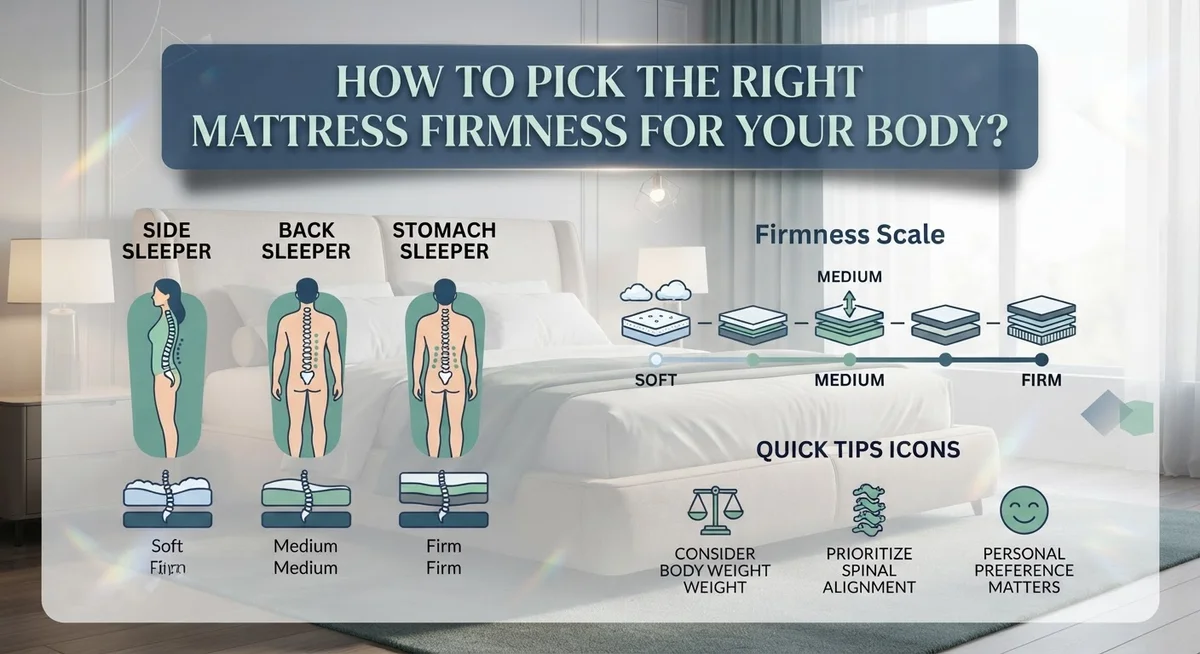
Side sleepers need medium soft to medium firm mattresses. When you sleep on your side, your hips and shoulders bear most of your weight. A softer surface lets these pressure points sink in slightly, which reduces strain on your joints. Too firm a mattress leaves gaps under your waist, causing your spine to curve unnaturally.
Back sleepers benefit from medium to medium firm options. Your lower back needs support to stay neutral when lying flat. A mattress that’s too soft sags under your lower body weight, creating an S-curve in your spine. A mattress that’s too firm leaves a gap under your lower back, which also misaligns your spine.
Stomach sleepers typically prefer medium firm to firm mattresses. This position puts pressure on your lower back and neck. A softer mattress sinks too much, twisting your spine. A firmer surface keeps your body level and prevents excessive sinking.
Test your chosen firmness in your actual sleeping position. Lie down for at least 10 to 15 minutes in each position you normally use at night. Pay attention to how your spine feels. Does it feel supported or does it feel like it’s bending? Do your pressure points feel cushioned or do they ache?
If you switch between multiple positions during the night, look for a medium firmness level. This middle ground provides decent support and cushioning for all positions, even if it’s not perfect for any single one.
Health Conditions and Firmness: What to Keep in Mind
Health conditions often change what firmness level works best for your body. Understanding this connection helps you avoid waking up with pain or stiffness.
Back pain and firmness go hand in hand. If you have chronic back pain, you need a mattress that keeps your spine neutral. Too soft, and your spine sags. Too firm, and pressure builds up. Most people with back issues find medium to medium firm options reduce morning discomfort. The key is that your mattress supports the natural curve of your spine without forcing it into an unnatural position.
Arthritis and joint pain require extra cushioning at pressure points. Side sleepers with arthritis benefit from medium soft to medium firm mattresses. This softness absorbs impact on your hips and shoulders while still providing support. If you have arthritis in your lower back, test how the mattress feels when you lie in your typical sleeping position.
Neck and shoulder issues demand careful attention. A mattress that’s too firm can create tension in these areas. A mattress that’s too soft allows your head to sink, twisting your neck. Medium firmness often works well here, but always test before buying.
Sleep apnea and breathing problems sometimes improve with the right firmness. Some people sleep better on slightly firmer surfaces that keep their airway more open. Talk to your doctor about what firmness level might help your specific condition.
Acid reflux and digestive issues occasionally improve when you sleep on a firmer surface. This position helps keep stomach acid down.
The bottom line: your health condition should guide your firmness choice just as much as your body weight or sleeping position does. Test multiple firmness levels to see which one reduces your symptoms.
Finding Common Ground When Sharing a Bed
When two people share a bed, their firmness preferences often clash. One partner might love a soft, cloud like feel while the other needs firm support. Finding the right balance keeps both sleepers happy and rested.
Start by discussing preferences openly. Ask your partner what firmness level they prefer and why. Do they need extra support for their back? Do they want more cushioning for pressure relief? Understanding each other’s needs makes compromise easier.
Consider a medium firmness mattress as your starting point. Medium options work well for most body types and sleeping positions. This level typically provides enough cushioning for side sleepers while offering adequate support for back and stomach sleepers.
Test mattresses together whenever possible. Lie down side by side in your typical sleeping positions. Spend at least 10 to 15 minutes on each mattress. Notice how your spine aligns and whether you feel pressure points. Your partner should do the same.
Weight differences matter significantly. If one partner is considerably heavier, they may need firmer support while the lighter partner prefers softer cushioning. A medium firm mattress often splits the difference effectively.
Look for mattresses with zoned support or layered construction. Some designs provide different firmness levels in different areas. This approach helps both partners get their ideal support without complete compromise.
Check return policies before committing. Many companies offer trial periods. Use this time to test the mattress in your actual bedroom with your partner. Real world conditions reveal comfort levels that showroom testing cannot.
Communication and testing together create the best outcome. Your shared comfort depends on finding firmness that satisfies both sleepers’ needs and body types.
Step-by-Step: How to Test and Evaluate Firmness
Testing mattress firmness requires a hands-on approach. You need to lie down and spend real time experiencing how each option feels against your body.
Start by visiting a mattress showroom during a time when it’s not crowded. You’ll have space to move around and test multiple options without feeling rushed. Wear comfortable clothing similar to what you sleep in at night.
Lie down in your normal sleeping position for at least 10 to 15 minutes on each mattress. This gives your body time to adjust and settle into the surface. Don’t rush this step. Quick tests won’t reveal how the firmness affects your spine alignment over time.
Pay attention to specific sensations. Notice where your body sinks into the mattress and where it feels supported. Your spine should feel neutral, not curved or twisted. Place your hand under your lower back. If you can slide your hand through easily, the mattress might be too soft. If you can’t fit your hand at all, it could be too firm.
Test the mattress from different angles. Roll to your side, shift to your back, and try other positions you use during sleep. Firmness can feel different depending on where you lie.
Bring your partner along if you share a bed. Have them lie down beside you and observe how the mattress responds to both your weights together. This reveals how the surface performs with two people.
Take notes on each mattress you try. Write down the firmness level, how it felt, and any pressure points you noticed. These notes help you compare options later and make a more confident decision.
Common Mistakes People Make When Choosing Firmness
Many people make simple but costly mistakes when picking mattress firmness. Understanding these errors helps you avoid them.
Ignoring your sleeping position is the biggest mistake. Side sleepers need softer support to cushion their hips and shoulders. Back sleepers require firmer mattresses for proper spine alignment. Stomach sleepers need medium firmness to prevent their midsection from sinking too deep. Choosing firmness without considering how you actually sleep leads to poor support and discomfort.
Testing for only a few minutes gives you false impressions. Your body needs time to settle into the mattress. Lie down for at least 10 to 15 minutes in your actual sleeping position. This reveals whether the mattress truly supports you or just feels good initially.
Relying on brand reputation alone is another common error. A popular mattress brand doesn’t guarantee the right firmness for your body. What works for others may not work for you. Test multiple options yourself instead of trusting marketing claims.
Overlooking your body weight affects firmness selection significantly. Heavier bodies need firmer support to prevent excessive sinking. Lighter bodies often prefer softer surfaces that don’t feel too rigid. The same firmness level feels different depending on your weight.
Ignoring your partner’s needs causes problems in shared beds. Your ideal firmness might be too soft or too firm for them. Discuss preferences openly and test mattresses together. Look for options with balanced support that satisfy both sleepers.
Forgetting to check return policies leaves you stuck with wrong choices. Always review return windows and conditions before purchasing. This safety net lets you exchange the mattress if firmness doesn’t work after sleeping on it for several weeks.
Final Thoughts
Picking the right mattress firmness comes down to knowing your body. Your weight, sleep position, and health needs all play a role.
There is no single firmness level that works for everyone. What feels perfect for your friend might feel wrong for you.
Spine alignment should guide your decision above all else. A mattress that keeps your spine neutral will support better sleep and less pain.
Take time to test different options before you decide. Lie down for at least ten minutes in your normal sleep position.
Notice how your hips, shoulders, and lower back feel. These pressure points tell you if the mattress works for your body.
If you share a bed, talk with your partner early. Discuss what each of you needs and find options that work for both people.
Medium firmness often works well as a compromise. It gives balanced support without feeling too soft or too hard.
Don’t rush this decision. Buying a mattress is a long term commitment that affects your health every night.
Check return policies before you buy. This gives you a safety net if the mattress doesn’t feel right after a few weeks.
Remember that comfort and support work together. A good mattress cushions your body while keeping your spine properly aligned.
Trust how your body feels over brand names or marketing claims. Your comfort is personal, and testing matters more than reputation.
Take your time, ask questions, and test thoroughly. The right firmness will help you wake up refreshed and pain free every morning.
Frequently Asked Questions
Does mattress firmness change based on body weight?
Yes, body weight plays a significant role in how a mattress feels. Heavier individuals often sink deeper into softer mattresses, which can reduce support. They typically benefit from firmer options that provide better alignment. Lighter people may find very firm mattresses uncomfortable because they don’t compress enough to cushion pressure points.
Your weight helps determine which firmness level works best for your spine alignment and overall comfort.
Can side sleepers and back sleepers use the same firmness level?
Not always. Side sleepers need more cushioning to protect their shoulders and hips from pressure. Back sleepers typically prefer slightly firmer support to keep their spine neutral. Stomach sleepers have different needs too.
If you switch positions during sleep, a medium firmness often serves as a good compromise. Test your preferred sleeping position for at least 10 to 15 minutes to see how the mattress feels.
What if my partner and I prefer different firmness levels?
This is a common challenge. Communication helps here. Discuss your needs before shopping together. Some mattresses offer zoned support or layered construction that accommodates different preferences on each side of the bed.
Testing the mattress together shows how it performs for both of you. Pay attention to how your partner’s movements affect your side.
How long does it take to adjust to a new mattress firmness?
Most people need 30 days to fully adjust to a different firmness level. Your body adapts to new support gradually. Don’t judge a mattress after one night. Give yourself time to see how it affects your sleep quality and morning stiffness.
Return policies typically allow 30 to 100 nights, so use this window to truly evaluate your choice.

DK is the founder of Deep Slumber Finds, where he combines a genuine passion for quality sleep with thorough product research to help readers make confident buying decisions. When he’s not testing mattresses or comparing pillows, you’ll find him exploring the latest sleep science and hunting down the best deals so you don’t have to.